

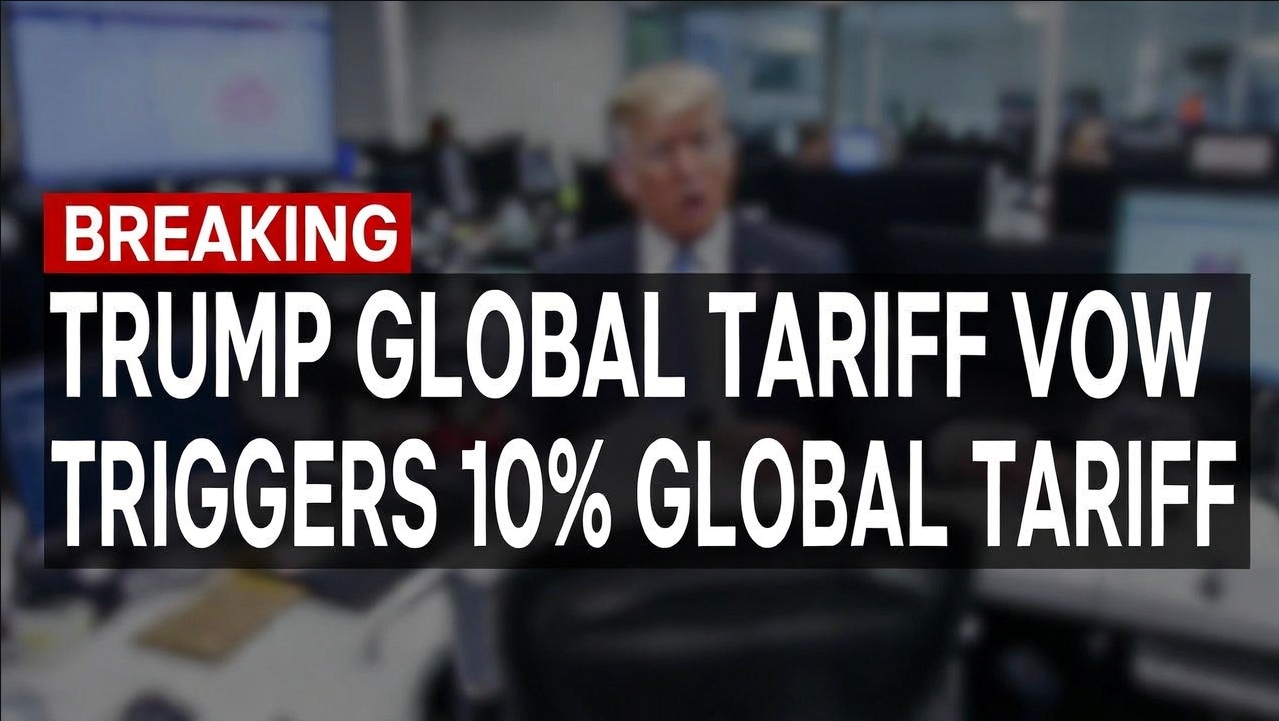
Trump Raises US Global Tariff Rate from 10% to 15%, announcing a new round of temporary import duties just one day after the US Supreme Court struck down his previous tariff programme as invalid.
US President Donald Trump said on Saturday that he would increase the across-the-board tariff on almost all US imports to the maximum 15% level allowed under federal law. The move follows a major ruling by the Supreme Court of the United States, which found that Trump had exceeded his authority when he imposed higher tariffs under an economic emergency statute.
Trump Raises US Global Tariff Rate from 10% to 15% Under Section 122
After the court’s 6-3 decision invalidated his earlier tariff framework, Trump immediately introduced a temporary 10% universal tariff on Friday. Now, he has escalated that rate to 15%, citing a separate legal authority known as Section 122.
Section 122 allows the president to impose tariffs of up to 15% for 150 days without prior congressional approval. However, any extension beyond that period would require Congress to step in.
In a post on Truth Social, Trump defended the move:
“I, as President of the United States of America, will be, effective immediately, raising the 10% Worldwide Tariff on Countries… to the fully allowed, and legally tested, 15% level.”
He argued that many countries had been “ripping” the United States off for decades and framed the tariff hike as a corrective measure.
Supreme Court Ruling Triggers Immediate Policy Shift
The Supreme Court ruled that Trump had overstepped his authority when he used an economic emergency law to impose sweeping and higher import taxes. The justices concluded that the statute cited by the administration did not grant such broad tariff powers.
The 6-3 ruling significantly reshaped the legal landscape around executive trade authority. However, Trump has shown little sign of backing down, instead pivoting to alternative legal pathways.
Following the decision, Trump publicly criticized individual justices and insisted he retained broad power to impose tariffs in the national interest.
Alternative Legal Tools for Future Tariffs
The administration signaled that it plans to rely on two additional statutes that permit tariffs under specific conditions:
- National security investigations
- Unfair trade practice determinations
These tools allow import taxes targeting particular countries or industries, rather than blanket global tariffs. Officials indicated that during the 150-day window under Section 122, the White House would work to develop “legally permissible” tariff measures.
ALSO READ: Trump global tariff vow triggers 10% global tariff
Economic and Global Trade Implications
The decision to raise tariffs to 15% is likely to have far-reaching consequences for global trade. Economists warn that higher import taxes could increase consumer prices in the United States, disrupt supply chains, and escalate tensions with key trading partners.
Critics argue that broad-based tariffs function as a tax on American consumers and businesses, while supporters claim they strengthen domestic industries and correct trade imbalances.
The move also signals that Trump’s global trade strategy remains firmly confrontational. Despite the court setback, the administration appears determined to continue reshaping US trade policy through aggressive tariff measures.
International markets and foreign governments are expected to respond cautiously as the situation develops.
Political Reaction and Legal Debate
The court’s ruling and Trump’s immediate response have reignited debate over the limits of presidential authority in trade matters. Lawmakers from both parties have weighed in, with some supporting stronger congressional oversight and others backing the president’s hardline trade approach.
The coming months will likely see further legal scrutiny and potential legislative action, particularly if the administration seeks to extend tariffs beyond the 150-day limit permitted under Section 122.
FAQ: Trump Raises US Global Tariff Rate from 10% to 15%
Q1: Why did Trump raise the US global tariff rate from 10% to 15%?
A: After the Supreme Court struck down his previous tariff programme, Trump used Section 122 authority to increase the global tariff to the maximum 15% allowed without congressional approval.
Q2: What did the Supreme Court decide?
A: The Supreme Court ruled 6-3 that Trump had exceeded his authority under the economic emergency law he initially used to impose higher tariffs.
Q3: How long can the 15% tariff remain in place?
A: Under Section 122, the tariff can last for 150 days. Any extension would require approval from Congress.
Q4: Could additional tariffs follow?
A: Yes. The administration has indicated it may rely on other trade laws allowing tariffs based on national security or unfair trade investigations.
Q5: How might this affect consumers?
A: Economists warn that higher tariffs could increase prices on imported goods and potentially impact supply chains.
