

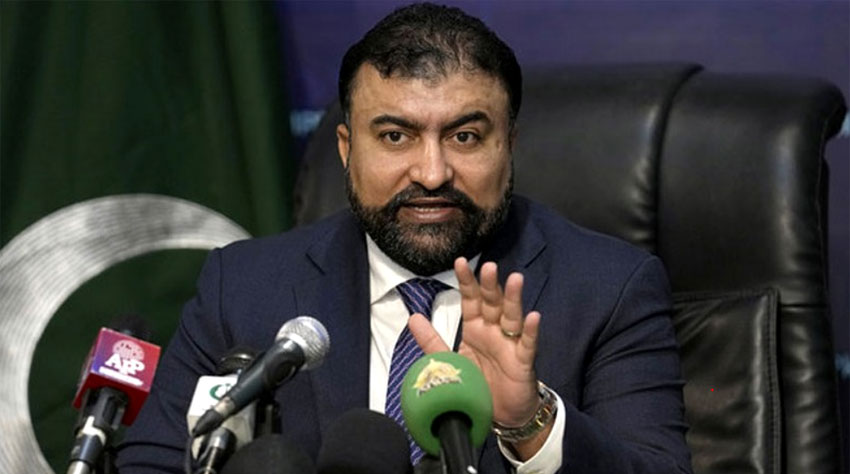
Pakistan’s fight against terrorism entered a decisive phase as Balochistan Chief Minister Mir Sarfraz Bugti announced that security forces had 145 terrorists killed within just 40 hours during coordinated counterterrorism operations across the province. Addressing a press conference in Quetta, CM Bugti reaffirmed the state’s unwavering resolve to defeat militancy, declaring that Pakistan would not surrender its sovereignty under any circumstances.
The large-scale intelligence-based operations (IBOs) were launched in response to a wave of coordinated terrorist attacks carried out across multiple districts of Balochistan. According to officials, the swift response by security agencies prevented a far greater catastrophe and foiled attempts to target critical state infrastructure.
145 Terrorists Killed in Unprecedented Counterterrorism Operations
CM Bugti described the recent operations as one of the most significant successes in Pakistan’s ongoing war on terror. He confirmed that the bodies of 145 terrorists were in the custody of authorities, calling it the highest number of militant casualties recorded in such a short time frame.
Security sources revealed that terrorists linked to Fitna-al-Hindustan were responsible for the attacks. The term is used by the state to highlight what it describes as India’s alleged involvement in sponsoring terrorism and destabilisation within Pakistan, particularly in Balochistan.
The military’s media wing stated that security forces alone neutralised 92 terrorists while responding to the attacks, while earlier pre-emptive strikes killed dozens more based on actionable intelligence.
Heavy Sacrifices by Security Forces and Civilians
While highlighting the operational success, CM Bugti also acknowledged the heavy sacrifices made. He confirmed that 17 personnel from law enforcement agencies, including police, Frontier Corps (FC), and one Pakistan Navy officer, were martyred in the line of duty. In addition, 31 civilians lost their lives, with several others injured.
“These sacrifices will not be forgotten,” Bugti said, adding that the government would take full responsibility for the welfare, education, and future of the martyrs’ children. He emphasised that the state stood shoulder to shoulder with the bereaved families during this painful time.
Intelligence Reports Helped Foil Major Terrorist Plans
The chief minister revealed that intelligence agencies had received prior warnings about the planned attacks. As a result, pre-emptive intelligence-based operations were launched a day earlier in areas such as Shaban and Panjgur, where approximately 40 terrorists were eliminated.
According to CM Bugti, militants had planned to advance toward Quetta from Shaban and even aimed to breach the Red Zone and occupy sensitive state assets. Due to heightened vigilance, most of these plans were thwarted before they could materialise.
He acknowledged that operations in Nushki took longer due to the complexity of the terrain and the nature of resistance but confirmed that the area had now been completely cleared.
Gwadar Attack Described as the Most Painful Incident
Among the multiple attacks, the incident in Gwadar was termed the most heartbreaking by CM Bugti. He stated that five women and three children were killed, underscoring the inhuman and indiscriminate nature of terrorist violence.
Bugti accused terrorist groups of exploiting Baloch identity narratives on external instructions. “Whenever Pakistan begins to stabilise economically or diplomatically, such attacks are orchestrated to derail progress,” he said.
Rejection of Dialogue With Armed Terror Groups
CM Bugti strongly criticised attempts to frame terrorism as a political issue or justify violence under the banner of ethno-nationalism. He categorically rejected the idea of holding dialogue with armed groups like the Balochistan Liberation Army (BLA).
“Are they a registered political party that we should negotiate with?” he asked. “They want surrender, and that will never happen. We will fight this war for a thousand years if needed.”
He warned that rationalising violence only emboldened terrorist organisations and amounted to indirect support for their ideology.
Intelligence-Based Operations, Not Military Crackdowns
Addressing concerns about the use of force in Balochistan, CM Bugti clarified that no large-scale military operations were being conducted in cities. Instead, the fight against terrorism relied entirely on intelligence-driven, precision-based actions.
He stressed that security forces deliberately avoided heavy-handed tactics to prevent civilian casualties. “We could eliminate terrorists easily with brute force, but we refuse to become brutal like them,” Bugti said, explaining that militants often hide among civilians.
Allegations of Indian Involvement and RAW Backing
Both CM Bugti and Defence Minister Khawaja Asif accused India’s intelligence agency, RAW, of backing terrorist activities in Balochistan. They claimed that Pakistan possessed solid and circumstantial evidence, including confessional statements, linking the attacks to external handlers.
Defence Minister Asif stated that peace had been restored following the attacks and that security forces were conducting mopping-up operations to eliminate any remaining threats.
Female Suicide Bombers and a Disturbing New Trend
Khawaja Asif revealed a troubling development, stating that terrorist groups had begun using female suicide bombers. Women were reportedly involved in at least two attacks across the 12 targeted cities, including a suicide bombing attempt in Pasni.
“The minds of young women are being polluted,” Asif warned, adding that terrorist handlers operating from Afghanistan were indoctrinating children and vulnerable individuals for violent purposes.
International Condemnation and US Support for Pakistan
The terrorist attacks drew widespread international condemnation. US Charge d’Affaires Natalie Baker strongly denounced the violence and reaffirmed Washington’s support for Pakistan’s efforts to maintain peace and stability.
She reiterated that the BLA was a US-designated Foreign Terrorist Organisation and expressed solidarity with the Pakistani people. The United Kingdom, Qatar, Saudi Arabia, and other nations also condemned the attacks.
Notably, in August 2025, the United States formally designated the BLA and its Majeed Brigade as foreign terrorist organisations, reinforcing global recognition of the group’s violent activities.
Post-2018 Appeasement Policies Blamed for Terror Surge
CM Bugti attributed the resurgence of terrorism to what he described as appeasement policies adopted after 2018. He argued that institutional accountability had since been enforced but questioned whether political leadership had held itself to the same standard.
“The biggest reason behind today’s rise in terrorism is appeasement,” he asserted, calling for unity and firmness in confronting militant threats.
Pakistan’s Unyielding Resolve Against Terrorism
Reaffirming the state’s determination, CM Bugti concluded with a powerful message: Pakistan will not tire, retreat, or surrender in its fight against terrorism. With intelligence-led operations, regional cooperation, and international support, the government aims to dismantle militant networks and secure lasting peace in Balochistan.
“This Pakistan is not for breaking away,” he said. “No force, internal or external, can take even an inch from us.”
