

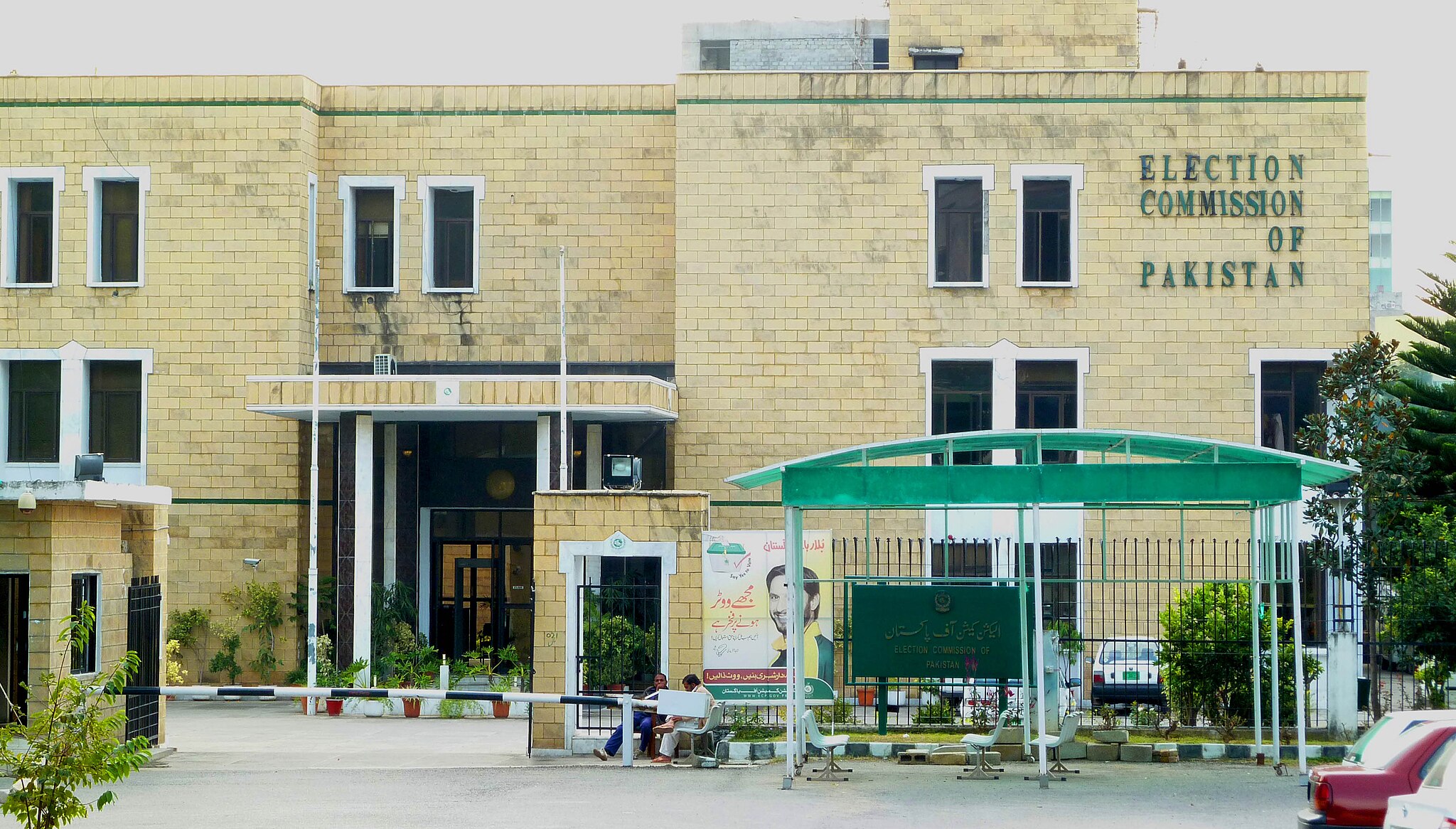
The Election Commission of Pakistan remains the constitutional authority responsible for ensuring that elections are conducted honestly, fairly and in accordance with the law. As Pakistan prepares for upcoming local government polls, the Election Commission of Pakistan has once again moved to the center of national political discourse.
With reforms underway and institutional scrutiny intensifying, understanding the Commission’s mandate has become essential for voters, political parties and policymakers alike.
Constitutional Mandate of the Election Commission of Pakistan
The Election Commission of Pakistan derives its authority from Article 218(3) of the Constitution, which obligates it to organize and conduct elections “honestly, justly, fairly and in accordance with law.” This constitutional protection grants the Commission operational independence from executive interference.
Beyond administering general and local government elections, the Election Commission of Pakistan supervises the preparation of electoral rolls, delimitations of constituencies and enforcement of electoral laws. Its jurisdiction also extends to monitoring compliance under the Election Act 2017.
This legal foundation positions the Commission not merely as an administrative body but as a constitutional guardian of democratic continuity.
Reform Agenda and Strategic Planning
In its recently launched Fourth Five-Year Strategic Plan (2025–2029), the Election Commission of Pakistan outlined a roadmap focused on transparency, institutional modernization and voter inclusion.
The reform blueprint emphasizes digital voter rolls, improved data verification mechanisms and enhanced training for polling staff. These measures are designed to address past operational challenges while reinforcing public trust in the electoral process.
Observers note that institutional reforms in electoral bodies are often decisive in stabilizing democracies, as highlighted in global reporting by <a href=”https://www.reuters.com” rel=”dofollow”>Reuters</a> and governance analyses published by <a href=”https://apnews.com” rel=”dofollow”>Associated Press</a>, which underscore the importance of credible election management institutions worldwide.
For Pakistan, the reform trajectory signals a shift toward greater administrative transparency.
Expanding Voter Participation Across Pakistan
With more than 126 million registered voters nationwide, the Election Commission of Pakistan faces the complex task of managing one of the largest democratic exercises in the region.
Women comprise nearly 46 percent of the electorate. Addressing turnout disparities remains a stated priority. The Commission has increased outreach initiatives aimed at improving female voter participation and enhancing accessibility for persons with disabilities.
Institutional sources indicate that special polling arrangements are being introduced in underserved districts to reduce structural barriers. Such measures are seen as critical to improving overall voter confidence, especially after turnout in the previous general elections remained below expectations.
For broader election coverage, readers can explore our internal analysis on <a href=”/pakistan-politics” rel=”dofollow”>Pakistan politics developments</a> and detailed updates in our <a href=”/elections” rel=”dofollow”>Elections section</a>.
Oversight of Political Parties and Campaign Compliance
The Election Commission of Pakistan plays a supervisory role beyond polling day management. It examines political party funding disclosures, campaign expenditures and adherence to codes of conduct.
Under the Election Act 2017, the Commission has quasi-judicial authority to adjudicate disputes and, where necessary, order re-polling in constituencies where irregularities are proven.
Legal experts argue that transparent enforcement of campaign finance regulations will determine whether reforms translate into durable institutional credibility.
The Commission’s ability to act impartially in politically polarized environments remains central to its legitimacy.
Institutional Challenges and Public Perception
Despite reform efforts, the Election Commission of Pakistan operates within a highly polarized political landscape. Competing parties frequently level allegations of bias, placing institutional neutrality under scrutiny.
Logistical hurdles also persist in remote and conflict-prone regions, where security concerns can complicate polling operations. Additionally, digital misinformation during election cycles poses a modern governance challenge.
Managing perception, therefore, is nearly as important as managing procedure. Transparent communication strategies and timely dispute resolution will likely shape how the public evaluates the Commission’s performance in upcoming local government elections.

2 thoughts on “Election Commission of Pakistan Explained Powerful Constitutional Role”