

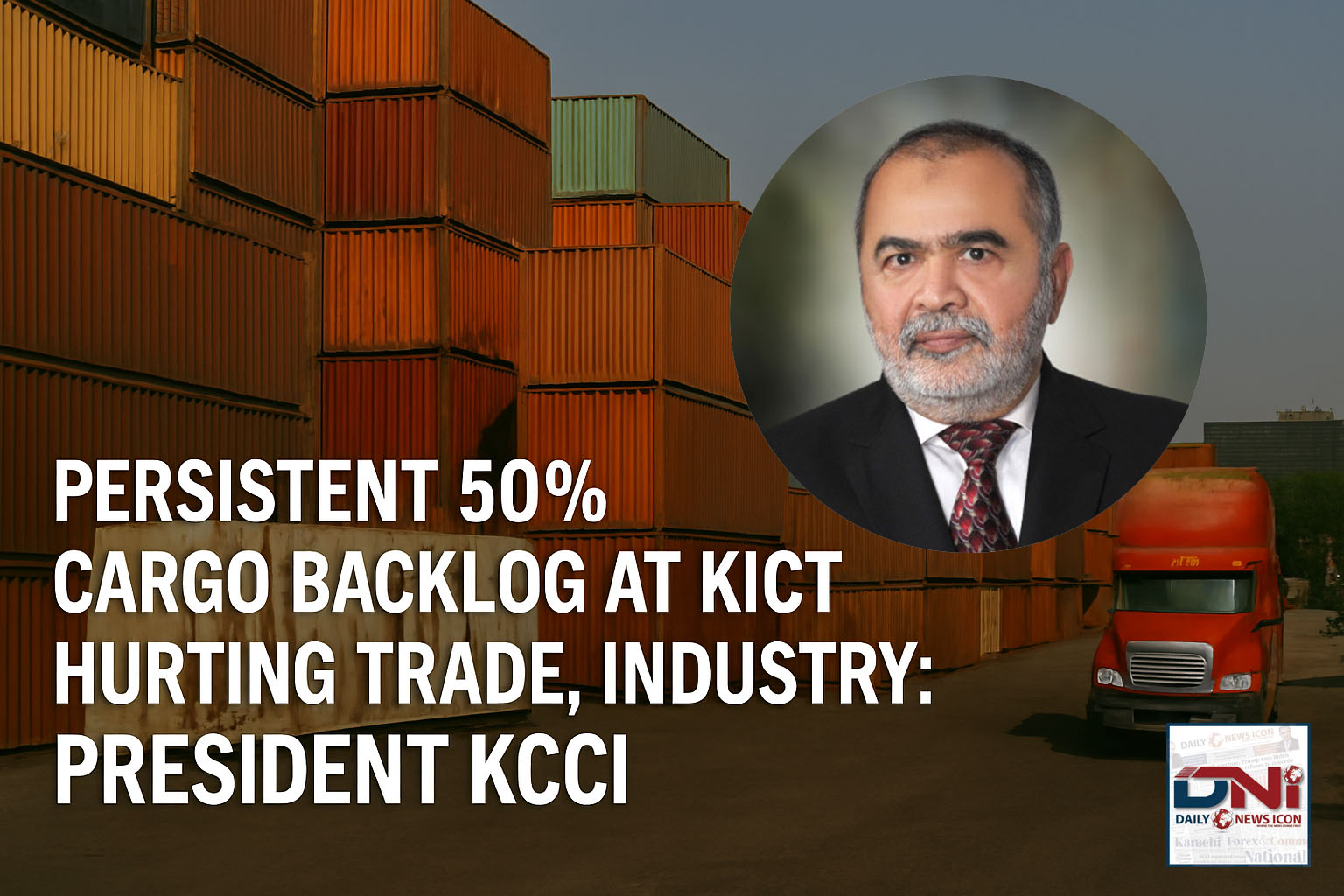
Persistent 50% Cargo Backlog at KICT Hurting Trade and Industry
KARACHI: The KICT cargo backlog issue continues to disrupt trade and industrial activity in Pakistan, according to the Karachi Chamber of Commerce & Industury. President KCCI Rehan Hanif said nearly 50% Cargo Backlog at KICT at Karachi International Container Terminal (KICT) every day.
He warned that the ongoing congestion is damaging supply chains. It is also raising costs for businesses and weakening ease of doing business.
50% Cargo Backlog at KICT as Customs Staff Shortage Slows Clearance
Rehan Hanif stated that the primary reason behind the growing congestion is a severe shortage of customs staff. He explained that consignments flagged for examination require at least 25 officers working under senior supervision, but limited manpower has significantly slowed the inspection process. As a result, containers continue to accumulate on a daily basis, while frequent staff rotations further delay clearance.
He also noted that more than 2,000 containers related to Afghan Transit Trade remain stranded at Karachi International Container Terminal (KICT), adding further strain on terminal operations and contributing to the 50 percent cargo backlog.
Modern Scanners Underused
The KCCI president expressed concern over the poor use of container scanners. These scanners can scan a container in less than a minute.
Despite this, clearance remains slow. He blamed inadequate training and weak monitoring. He also cited the absence of live streaming features and limited technical staff.
As a result, advanced technology has failed to deliver expected efficiency.
Priority Clearance Orders Ignored
Rehan Hanif referred to a meeting with the Chief Collector of Customs. During the meeting, officials assured priority clearance for single-item and industrial raw material consignments.
However, he said these instructions are not being followed. Even basic industrial shipments face delays. This affects factory operations and production schedules.
Truck Tracking Adds Another Bottleneck
The installation of tracking devices on trucks has become another hurdle. According to KCCI, installing a tracker on one truck takes four to five hours.
This causes long queues at terminals. It also delays cargo movement and raises logistics costs. Rehan Hanif said the process needs urgent review.
He also noted that KICT handles a large volume of mixed cargo. Such cargo requires unpacking and repacking for inspection. This long-standing issue continues to slow terminal flow.
Expected Surge May Worsen Situation
Rehan Hanif warned of additional pressure between February 5 and February 15, 2026. During this period, many consignments are expected to arrive.
This surge follows extended factory closures in China due to the Lunar New Year. Importers placed bulk orders in advance. At the same time, Eid-related imports are also increasing.
Without immediate action, congestion may worsen. This could lead to shortages and financial losses for businesses.
Why This Matters
Port congestion directly affects prices and availability of goods. Delays raise costs for importers and manufacturers. Consumers may also face higher prices and shortages in markets.
What Happens Next
KCCI has urged the finance minister, FBR chairman, and Member Customs Operations to intervene. The chamber wants more staff, faster scanning, priority clearance for industry, and a streamlined tracker system. Authorities are yet to respond publicly.

One thought on “50% Cargo Backlog at KICT Disrupts Trade, Says KCCI President”