

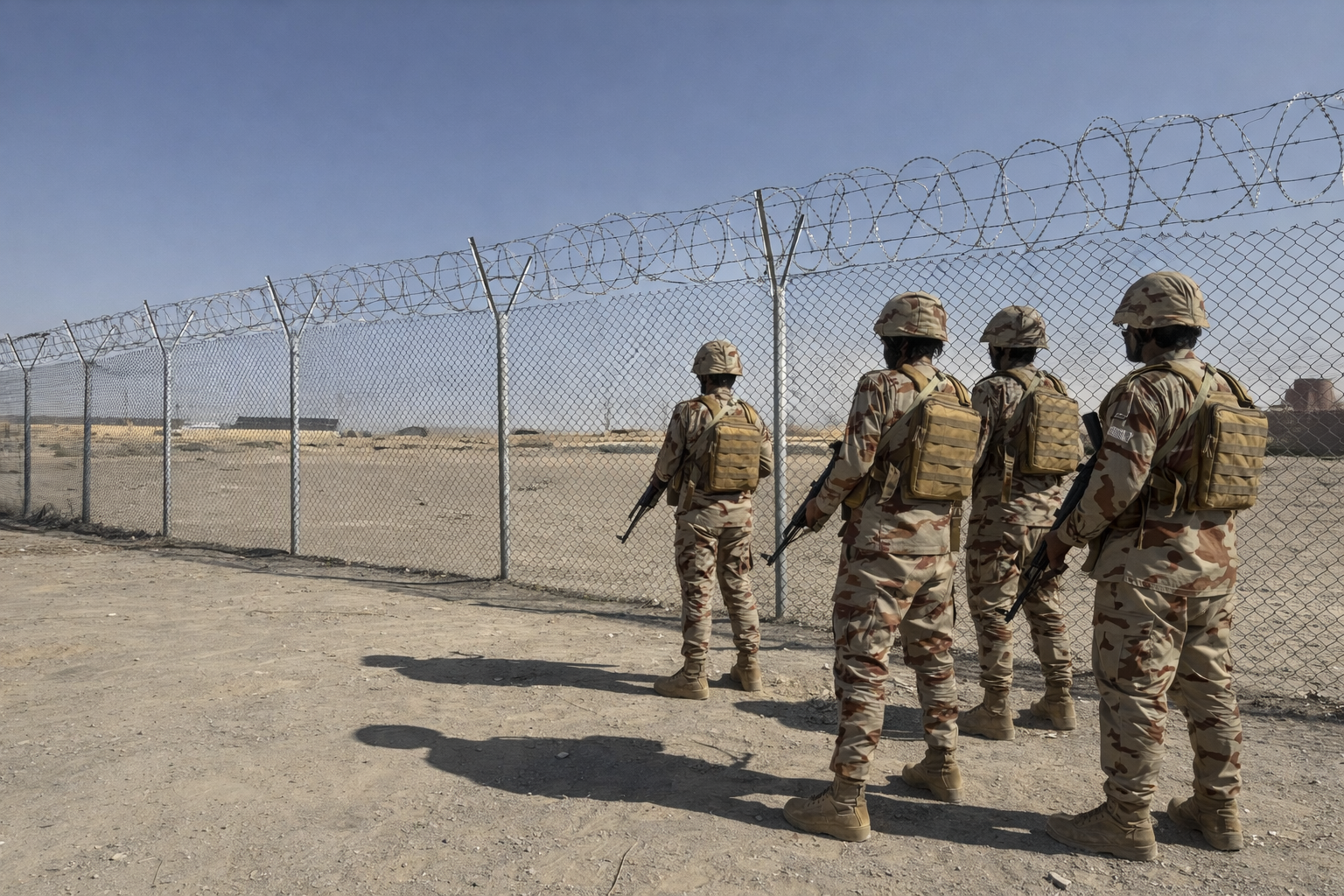
Afghanistan retaliatory attack on Pakistan has sharply escalated tensions along the disputed frontier, with both governments accusing each other of initiating hostilities. Officials in Kabul and Islamabad confirmed heavy cross-border exchanges, each claiming casualties and tactical gains.
The confrontation represents one of the most serious military flare-ups in recent months across the volatile border region.
Overnight Escalation Across Multiple Sectors
The Afghanistan retaliatory attack on Pakistan unfolded late Thursday across several frontier districts, including Chitral, Khyber, Mohmand, Kurram, and Bajaur.
Afghan officials said Taliban forces targeted Pakistani military posts in response to alleged airstrikes inside Afghan territory. Islamabad denied initiating aggression and described its actions as defensive after what it called “unprovoked fire” from across the border.
Security sources on both sides reported intense artillery and small-arms exchanges. Independent verification remains limited due to restricted access in mountainous border zones.
Taliban Claims and Battlefield Narrative
Authorities in Afghanistan stated that the Afghanistan retaliatory attack on Pakistan was designed to defend national sovereignty.
Taliban spokespersons claimed their forces captured several Pakistani army posts along the Durand Line. They accused Pakistan of repeated cross-border incursions and air operations.
These claims have not been independently confirmed. Journalists and humanitarian monitors face limited access to active conflict areas, making real-time verification difficult.
The Taliban government has consistently rejected allegations that militant groups operate freely from Afghan soil, calling such accusations politically motivated.
Pakistan’s Official Account
Pakistan’s Information Minister Attaullah Tarar said 36 Afghan Taliban fighters were killed during the clashes, with several others injured.
He confirmed that two Pakistani soldiers were martyred and three wounded. Islamabad described its response as “immediate and effective,” aimed at preventing infiltration attempts.
Pakistani officials argue that militant organizations based in Afghanistan pose a direct security threat. Islamabad has repeatedly urged Kabul to take decisive action against groups it accuses of targeting Pakistani territory.
Military sources indicated reinforcements were deployed to sensitive sectors to prevent further escalation.
The Durand Line Dispute
At the heart of the Afghanistan retaliatory attack on Pakistan lies the long-standing dispute over the Durand Line.
The colonial-era boundary, drawn in the nineteenth century, remains unrecognized by Kabul. Islamabad, however, considers it an internationally accepted border.
Since the Taliban returned to power in 2021, tensions along this frontier have intensified. Pakistan reports a surge in cross-border militant activity, while Afghan authorities accuse Islamabad of violating sovereignty through air operations.
Clashes near Torkham and Spin Boldak crossings have previously disrupted trade and civilian movement.
For broader regional analysis, international agencies such as Reuters and the Associated Press have documented recurring border incidents in recent years.
United Nations Reaction
The Afghanistan retaliatory attack on Pakistan has drawn concern from the international community.
United Nations officials urged both sides to exercise restraint. UN Human Rights Chief Volker Türk warned that civilian casualties could rise if hostilities continue.
He called for immediate dialogue and de-escalation, emphasizing the protection of border communities.
The UN’s appeal reflects broader fears that sustained military exchanges could destabilize an already fragile region.
Regional and Economic Implications
The Afghanistan retaliatory attack on Pakistan carries implications beyond military confrontation.
Border communities face displacement risks and disruption of daily life. Trade routes that facilitate transit between Central and South Asia could experience delays if crossings are restricted.
Economically, both countries rely on cross-border commerce and transit trade agreements. Any prolonged closure of key crossings may impact supply chains and local markets.
Diplomatic relations, already strained, face renewed pressure as both governments defend their positions publicly.
Why It Matters
The Afghanistan retaliatory attack on Pakistan underscores the volatility of South Asia’s security landscape.
Socially, civilians near the frontier face uncertainty and possible displacement. Politically, the clash tests fragile diplomatic engagement between Kabul and Islamabad. Economically, trade corridors and transit routes risk disruption.
Regionally, the escalation highlights how unresolved border disputes continue to influence stability.
What Happens Next
Following the Afghanistan retaliatory attack on Pakistan, both militaries are reinforcing defensive positions along the frontier.
Diplomatic backchannels are reportedly active, though no formal mediation has been announced. Regional stakeholders may intensify calls for restraint.
If communication channels remain open, tensions could stabilize. However, the risk of renewed exchanges remains significant should further incidents occur.
The coming days will likely determine whether the situation shifts toward dialogue or deeper confrontation.
FAQs
What triggered the Afghanistan retaliatory attack on Pakistan?
Afghan officials say the operation responded to Pakistani airstrikes. Islamabad disputes this, stating it acted after unprovoked cross-border fire.
Were casualties confirmed?
Pakistan reports 36 Afghan fighters killed and two Pakistani soldiers martyred. Afghan authorities claim territorial gains, but independent confirmation remains limited.
Why is the Durand Line disputed?
Afghanistan has historically refused to formally recognize the Durand Line, while Pakistan considers it a settled international border.
Could tensions escalate further?
Yes. Both sides remain on high alert. Diplomatic engagement could prevent broader escalation, but the situation remains fluid.
