

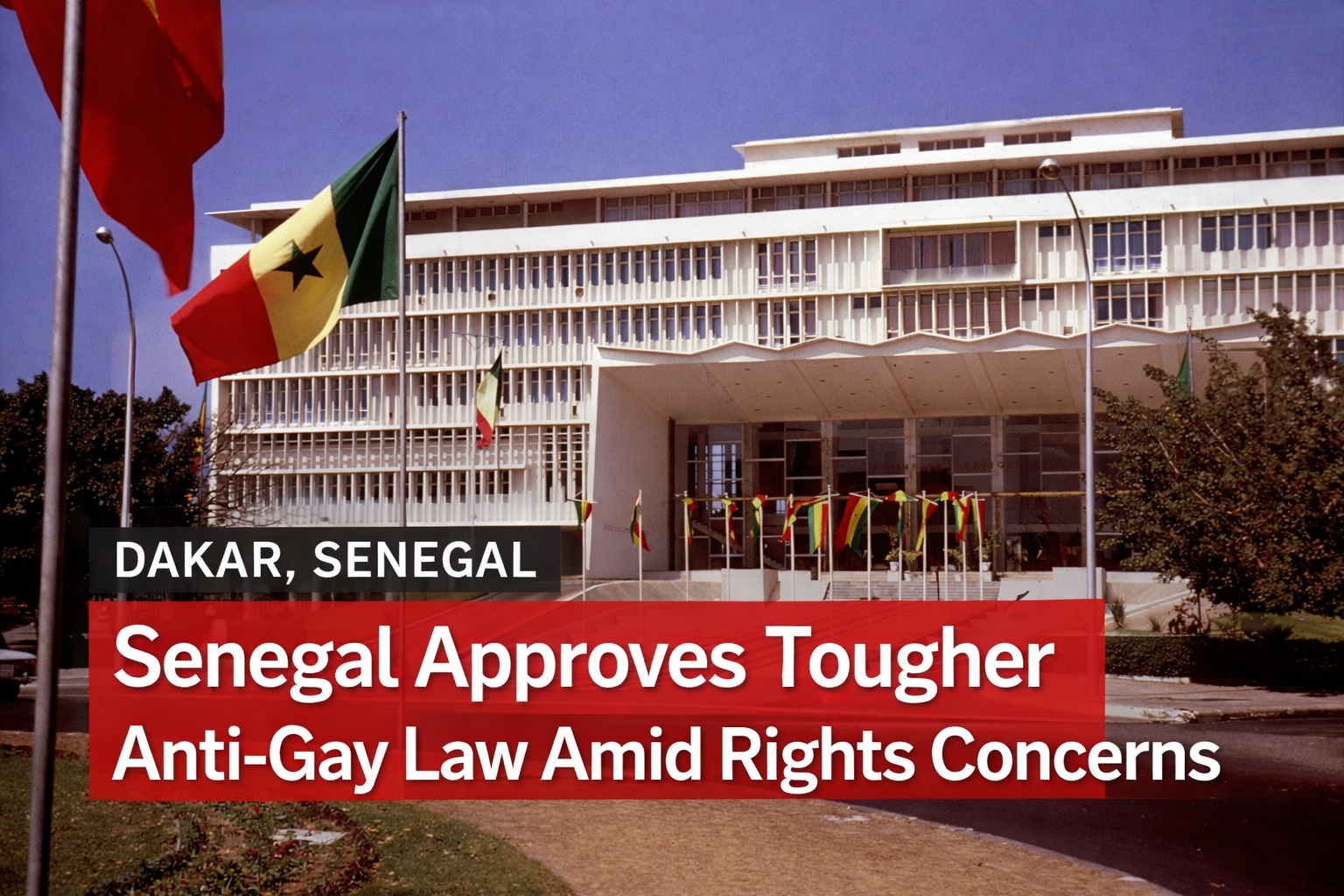
The Senegal Anti-Gay Law has been approved by the country’s parliament, introducing harsher penalties for same-sex relations and criminalising what authorities describe as the “promotion” of homosexuality. Lawmakers passed the legislation on Tuesday in Dakar with overwhelming support, triggering concern among international rights groups who warn it could intensify discrimination against sexual minorities.
Parliamentary officials said 135 lawmakers voted in favour of the bill, none opposed it, and three abstained during the session.
Senegal Anti-Gay Law Passed by Parliament with Strong Support
The Senegal Anti-Gay Law increases the maximum prison sentence for same-sex sexual acts to 10 years, significantly strengthening penalties already present in the country’s criminal code.
Same-sex relations were previously illegal in Senegal, but the new legislation introduces tougher punishment and provisions that target advocacy or public support for homosexuality.
The bill will now be sent to President Bassirou Diomaye Faye for final approval before it officially becomes law.
Government officials say the measure reflects public sentiment in the predominantly Muslim West African nation.
“The majority of Senegalese do not accept homosexuality. Our culture rejects it and we are firmly opposed to it,” government spokesperson Amadou Moustapha Ndieck Sarré said while responding to criticism from abroad.
Political Leaders Back Senegal Anti-Gay Law
The Senegal Anti-Gay Law follows campaign pledges made by President Bassirou Diomaye Faye and Prime Minister Ousmane Sonko during the country’s recent political transition.
Both leaders had promised stronger measures addressing what they described as moral and cultural issues within the country.
Supporters of the law argue that the legislation protects Senegal’s religious and cultural values.
One organisation advocating stricter laws is the conservative movement And Sàmm Jikko Yi, which campaigns to defend what it calls traditional Senegalese moral standards.
Activists within the group have for years demanded legislation that increases penalties for same-sex conduct.
Supporters say the law is necessary to preserve national identity amid what they view as external pressure to liberalise social policies.
Rights Groups Warn Senegal Anti-Gay Law Could Increase Discrimination
International rights organisations have criticised the Senegal Anti-Gay Law, warning that it could worsen discrimination and violence against LGBTQ communities.
Researchers from Human Rights Watch say criminalising sexual orientation violates internationally recognised rights protections.
“Criminalising same-sex conduct and arresting people for their sexual orientation violates multiple internationally protected rights, including equality and non-discrimination,” Human Rights Watch researcher Larissa Kojoué said.
She added that stricter criminal laws risk exposing already marginalised communities to “violence and fear.”
According to reporting by Reuters, several African countries have recently introduced tougher legislation targeting same-sex relationships, drawing criticism from international organisations and Western governments.
Arrests and Social Debate Intensify in Senegal
The debate surrounding the Senegal Anti-Gay Law intensified after police arrested several individuals last month on allegations related to same-sex relationships.
Authorities reportedly detained 12 men, including two public figures and a journalist, according to local media coverage.
The arrests triggered nationwide discussion about social values, law enforcement practices, and human rights protections.
Alioune Tine, founder of the Dakar-based think tank Afrikajom Center, said the situation could heighten social tensions.
“If it is true that social concerns must be addressed, the law also has to respect human rights and protect public-health policies,” Tine said in remarks reported by international media.
LGBTQ Advocates Raise Concerns Over Future Impact
Advocates for LGBTQ communities say the Senegal Anti-Gay Law may push individuals further into secrecy and fear.
Dr Charles Dotou, a physician and leader of a Senegal LGBTQ association, warned that harsher penalties are unlikely to eliminate same-sex relationships.
“Most same-sex relationships were hidden anyway,” Dotou said in an interview with BBC News.
He added that the stricter law could increase fear within already vulnerable communities.
“People will be hiding more, it will create more fear and people will be scared to live normally in that community,” he said.
Background: Laws and Cultural Debate in Senegal
Senegal has long criminalised same-sex relations under its penal code, reflecting the country’s conservative social environment shaped by religious and cultural norms.
However, recent years have seen increasing debate over human rights, public health policies, and legal protections for minority communities.
International observers say the passage of the Senegal Anti-Gay Law reflects broader tensions between domestic political priorities and global human rights standards.
Analysts note that the issue may continue to shape political debate within Senegal as the government balances social values, legal reforms, and international scrutiny.
