

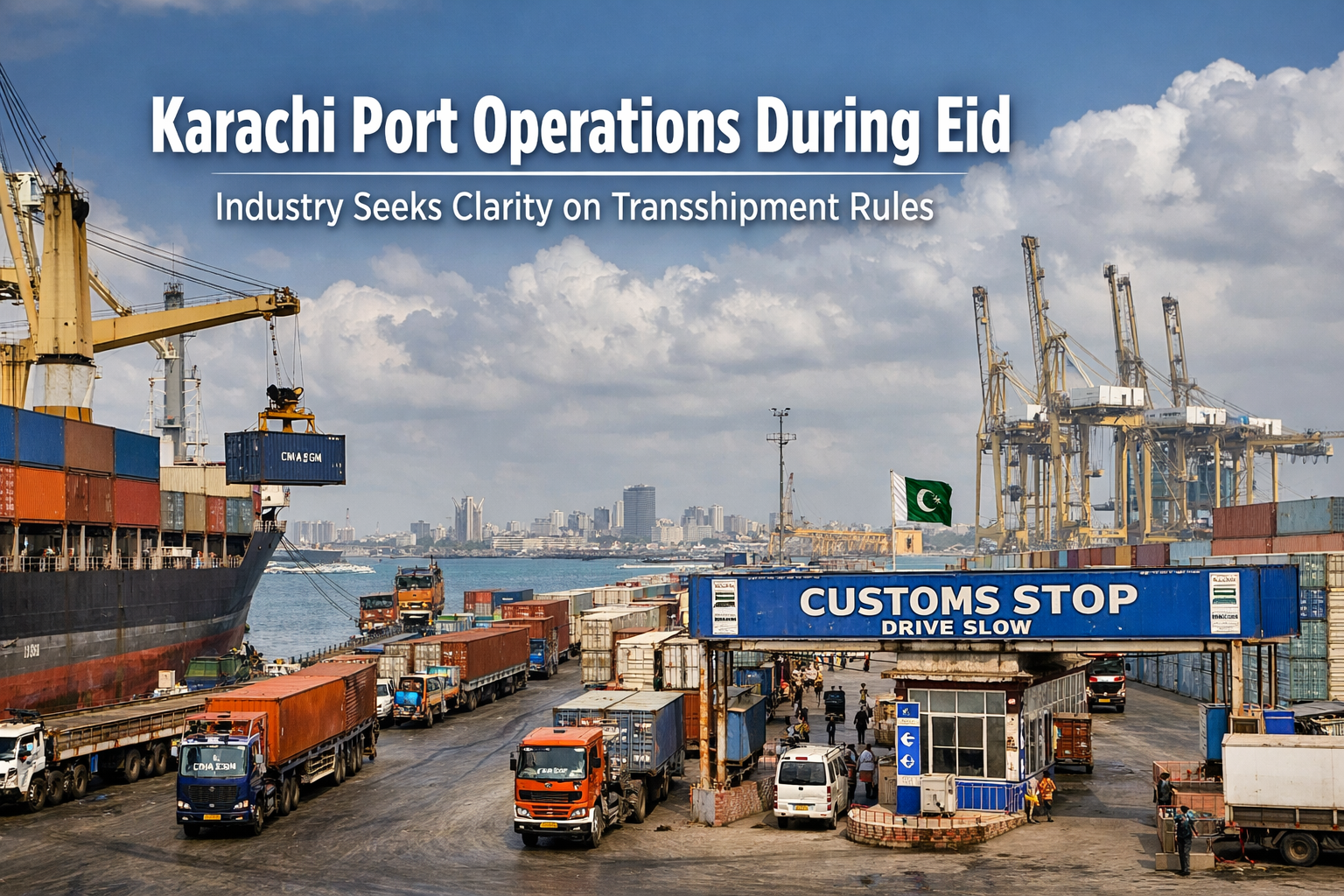
Karachi: Karachi Port operations remained uninterrupted during the Eid holidays, drawing appreciation from the maritime and logistics sector for ensuring smooth trade flow and supply chain continuity at a critical time. Industry stakeholders also called for continued dialogue on recent regulatory changes affecting transshipment cargo.
The decision by the Karachi Port Trust (KPT) to keep port gates and operations open during the holidays was widely welcomed by shipping lines and trade bodies. Officials said the move reflected proactive planning aimed at minimizing disruptions and maintaining efficiency in cargo handling.
“Ensuring uninterrupted Karachi Port operations during Eid demonstrates strong commitment to trade facilitation,” a senior industry representative said, noting that such measures help maintain confidence among global shipping lines.
Karachi Port Operations Strengthen Trade Confidence
Stakeholders said consistent Karachi Port operations during peak holiday periods enhance the port’s reputation as a reliable hub for both gateway and transshipment cargo. The initiative is seen as part of broader efforts to position Karachi as a competitive maritime center in the region.
Industry participants highlighted that uninterrupted services prevent cargo backlog, reduce demurrage costs, and support exporters and importers who rely on timely shipments.
Industry Raises Concerns Over Transshipment Rules
At the same time, the shipping community has raised concerns over recent amendments introduced through SRO 517(I)/2025 by the Federal Board of Revenue (FBR).
While acknowledging the importance of regulatory oversight and customs compliance, stakeholders have sought clarity on provisions related to the assignment of responsibility for duties, taxes, and liabilities.
“Shipping lines operate based on cargo manifests received from the port of loading and have limited visibility once containers are discharged,” an industry official explained. “Responsibility should align with operational control.”
Karachi Port Operations and Cargo Handling Challenges
Industry representatives pointed out that after cargo discharge, terminal operators and off-dock facilities assume custody under established procedures. Movement of containers is managed by bonded transporters under customs supervision, reducing the direct role of shipping lines in inland logistics.
Concerns were also raised about mandatory scanning requirements for containers moving between terminals and off-dock facilities. Stakeholders warned that excessive scanning could create bottlenecks and delays.
“Additional scanning requirements may impact Karachi Port operations by slowing cargo flow and increasing costs,” a shipping executive said.
Regional Competition and Cost Pressures
Shipping lines noted that added operational costs—particularly scanning charges—could reduce Karachi Port’s competitiveness compared to regional hubs such as Jawaharlal Nehru Port, Mundra Port, Port of Colombo, and Sohar Port.
Unlike local cargo, transshipment shipments often lack a domestic consignee, meaning additional charges are typically absorbed by carriers. Industry players cautioned that higher costs and delays could divert traffic to competing ports offering incentives and streamlined procedures.
Call for Dialogue on Karachi Port Operations Framework
Despite these concerns, the shipping community expressed support for the government’s efforts to strengthen trade systems and ensure compliance with international standards.
Stakeholders emphasized the need for a collaborative approach between regulators and industry participants to refine the transshipment framework. They said dialogue could help strike a balance between regulatory objectives and operational efficiency.
“The industry remains committed to constructive engagement with authorities,” an official said. “A consultative approach will help enhance Karachi Port operations while supporting Pakistan’s ambition to become a regional transshipment hub.”
Karachi Port handles a significant share of Pakistan’s maritime trade and serves as a key gateway for imports and exports. Over the years, authorities have introduced reforms aimed at improving efficiency, transparency, and compliance within the port and customs systems.
Recent regulatory updates by the Federal Board of Revenue are part of broader efforts to strengthen oversight and align procedures with international best practices, particularly in the handling of transshipment cargo.
Analysts say continued engagement between regulators and industry stakeholders will be critical in ensuring that efficiency gains in Karachi Port operations are sustained while maintaining compliance in an increasingly competitive regional environment.

One thought on “Karachi Port Operations During Eid Applauded as Industry Seeks Clarity”