

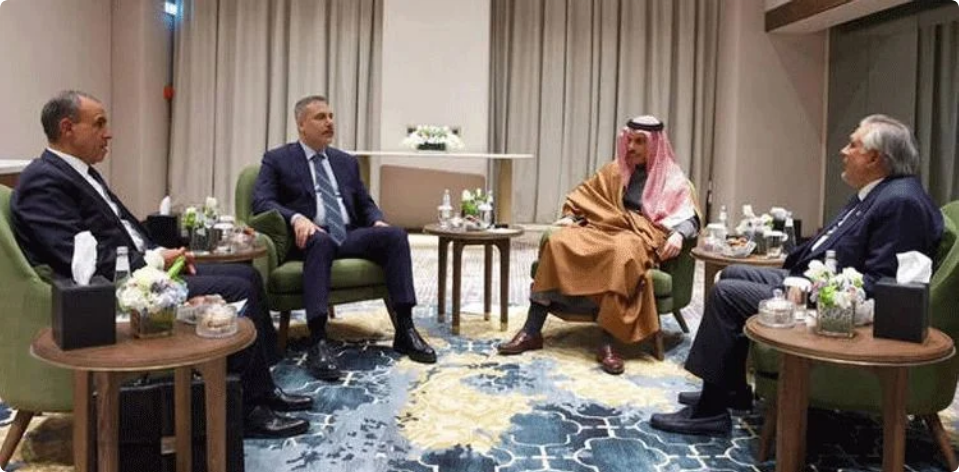
ISLAMABAD, March 28, 2026 — Islamabad Iran war peace talks escalated on Sunday as Pakistan hosted senior diplomats from Saudi Arabia, Türkiye, and Egypt to broker a ceasefire in the ongoing Middle East conflict. The summit follows escalations involving Iran‑backed Houthi militants, whose attacks have intensified fears about regional instability and disruptions to global oil routes.
Deputy Prime Minister and Foreign Minister Senator Mohammad Ishaq Dar said Islamabad is committed to diplomacy and confidence‑building measures as the only viable path to de‑escalation. “We are working with our partners to ensure that dialogue replaces further violence,” Dar said during the opening session.
Prime Minister Shehbaz Sharif met Iranian President Masoud Pezeshkian on the sidelines to reinforce Pakistan’s role as a neutral mediator, underscoring Islamabad’s unique position as a nuclear‑armed state with deep ties to both Tehran and Washington.
Table of Contents
Threats to Global Oil Routes Heighten Urgency
The urgency of Islamabad Iran war peace talks is driven by increasing disruptions to major global energy corridors. On March 28, Houthi militants in Yemen launched a missile targeting Israel, which was intercepted by the Israeli military. The incident raised alarms about the Bab el‑Mandeb Strait and the Strait of Hormuz, both critical passages for global oil transport.
Saudi Arabia has rerouted millions of barrels of crude daily to maintain supply. United Nations Secretary‑General Antonio Guterres activated a task force to safeguard humanitarian and commercial shipments through these waterways, with Pakistan assisting operationally, reflecting its strategic diplomatic role.
Diplomatic Channels and De‑escalation Efforts
Egyptian Foreign Minister Badr Abdelatty said Islamabad’s summit aims to open direct channels between Washington and Tehran, reducing reliance on intermediaries that have slowed negotiations since hostilities began. The United States presented a 15‑point peace framework, while Iran offered a five‑point counter‑proposal through state media.
A senior Egyptian diplomat said preventing further civilian casualties and stabilizing the region remains the priority, adding that discussions include strategies to monitor military movements and prevent further escalation.
Background: 30 Days of Conflict and Rising Tensions
The Iran‑US War began on February 28, 2026, with U.S. and Israeli strikes on Iranian territory. Fighting quickly spread to Lebanon, Iraq, and surrounding waters. Casualties include more than 1,900 in Iran, over 1,100 in Lebanon, and additional fatalities in Israel, Iraq, and Gulf states.
Pakistan first signaled its readiness to mediate on March 3, proposing monitored frameworks to address nuclear and security concerns. Its strategic geography and established diplomatic ties with both Tehran and Washington position Islamabad as a pivotal mediator.
Outlook: Narrow Window for Resolution
Analysts caution that Islamabad Iran war peace talks face a narrowing window to produce meaningful results. With increased U.S. troop deployments and active militant fronts, the region remains on high alert. Trita Parsi, Middle East analyst at the Quincy Institute, said, “Pakistan’s mediation is critical, but success depends on all sides negotiating in good faith.”
Observers are watching whether the summit will result in breakthrough proposals, joint communiqués, or signs of sustained engagement that could prevent further conflict escalation.
For further updates on the Iran-US war and Pakistan’s diplomatic efforts, Pakistan Politics, stay tuned to our coverage on Middle East conflict news and regional diplomacy..
