

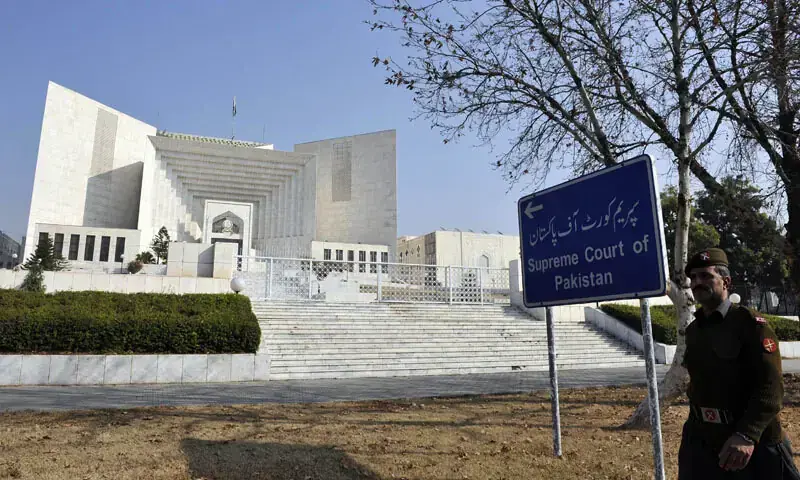
The Imran Khan hospital transfer plea encountered fresh procedural hurdles on Friday after the Supreme Court raised objections to the application seeking his transfer to a hospital of choice.
The development unfolded during proceedings before Chief Justice of Pakistan Yahya Afridi, who informed counsel that the plea had already been returned with objections.
Supreme Court Raises Objections Over Imran Khan Hospital Transfer Plea
The application was filed on February 25 by senior PTI lawyer Sardar Latif Khosa under Order XXXV Rule 6 of the Supreme Court Rules 2025. The petition sought immediate transfer of incarcerated former prime minister Imran Khan to Shifa International Hospital for specialized eye treatment.
Khosa, accompanied by advocate Naeem Panjotha, appeared before the bench requesting that the matter be scheduled for urgent hearing.
However, Chief Justice Afridi clarified that the application had been returned a day earlier due to procedural objections.
“Your petitions will remain pending until further orders,” the CJP remarked, adding that no valid application was currently before the court for adjudication.
Court Clarifies Position on Medical Treatment
During the exchange, Khosa argued that the court had earlier directed the government to ensure medical treatment for the PTI founder.
Chief Justice Afridi responded by stating that the court had not issued a direct order but had noted government assurances regarding treatment.
“You should read the court’s decision again as the health issue is not pending,” the CJP observed.
Justice Shahid Bilal Hassan also intervened, remarking on Khosa’s seniority and understanding of procedural norms.
The court advised counsel to consult the Supreme Court registrar for clarity regarding the objections. If necessary documentation was not provided, they were permitted to return to court.
Background of the Imran Khan Hospital Transfer Plea
The plea requested that Imran Khan be shifted to Shifa International Hospital in Islamabad for consultation with a retina specialist. It also sought access to his personal physicians, including Dr Faisal Sultan and Dr Aasim Yusuf, to supervise examinations and treatment.
The application cited humanitarian grounds rather than legal or political arguments. It emphasized that the 73-year-old former premier’s advancing age and deteriorating health required transparent and specialized medical care.
The matter comes amid heightened concern regarding Khan’s eye condition, identified as right central retinal vein occlusion (CRVO), which surfaced in late January.
According to a doctor at the Pakistan Institute of Medical Sciences (PIMS), Khan was transported for follow-up treatment on February 24 under government arrangements. However, his party criticized what it described as secrecy surrounding the medical examination.
For broader context on Pakistan’s judicial proceedings, readers can refer to reporting by Reuters and the Associated Press, which have covered developments related to Imran Khan’s legal battles.
Pending Matters Before Islamabad High Court
Sources indicate that PTI Chairman Gohar Ali Khan also met Chief Justice Afridi separately, raising concerns about the former premier’s health.
However, the Supreme Court reportedly declined to intervene at this stage, noting that related cases remain pending before the Islamabad High Court.
Legal observers suggest that the apex court’s reluctance reflects judicial restraint in matters where lower courts retain jurisdiction.
The hospital transfer plea also references the Toshakhana case, which led to Khan’s arrest in August 2023.
Humanitarian Argument Versus Procedural Discipline
In his submission, Khosa maintained that the transfer request was rooted in humanitarian considerations.
He argued that conducting medical examinations without prior notice to family members or independent doctors created apprehensions and transparency concerns.
Chief Justice Afridi responded that the recent medical check-up had also been conducted on humanitarian grounds, suggesting that the state had fulfilled its responsibility.
The exchange underscored a broader tension between humanitarian appeals and strict procedural compliance within Pakistan’s judicial system.
Why It Matters
The Imran Khan hospital transfer plea carries significance beyond an individual medical request.
First, it touches upon prisoners’ rights and access to specialized healthcare in Pakistan’s correctional facilities.
Second, it intersects with politically sensitive cases involving a former prime minister, raising public scrutiny of judicial processes.
Third, the issue may influence public perception regarding transparency in state-managed medical treatment.
Lastly, it reflects institutional balance between executive assurances and judicial oversight.
What Happens Next?
Legal experts anticipate that PTI’s legal team may rectify procedural objections and refile the application.
If objections are removed, the Supreme Court could decide whether to entertain the matter or defer entirely to the Islamabad High Court.
Public reaction is likely to remain closely tied to developments in Khan’s health condition. Any deterioration may intensify calls for independent medical supervision.
Institutionally, the judiciary appears committed to maintaining procedural discipline while avoiding overlapping jurisdictional interventions.
FAQs
Why did the Supreme Court object to the Imran Khan hospital transfer plea?
The court returned the application with procedural objections, meaning it did not meet technical requirements for hearing. The Chief Justice clarified that no valid application was currently before the bench.
Is Imran Khan receiving medical treatment?
Yes. According to court remarks and hospital sources, follow-up treatment was facilitated by the government at PIMS.
What medical condition is involved?
Imran Khan has been diagnosed with right central retinal vein occlusion (CRVO), an eye condition affecting retinal blood flow.
Can the Supreme Court still hear the case?
If procedural objections are addressed and the plea is properly refiled, the court may consider it. However, related matters are pending before the Islamabad High Court.
Why is the issue politically sensitive?
Because Imran Khan is a former prime minister and PTI founder, developments regarding his health and detention attract national and international attention.
