

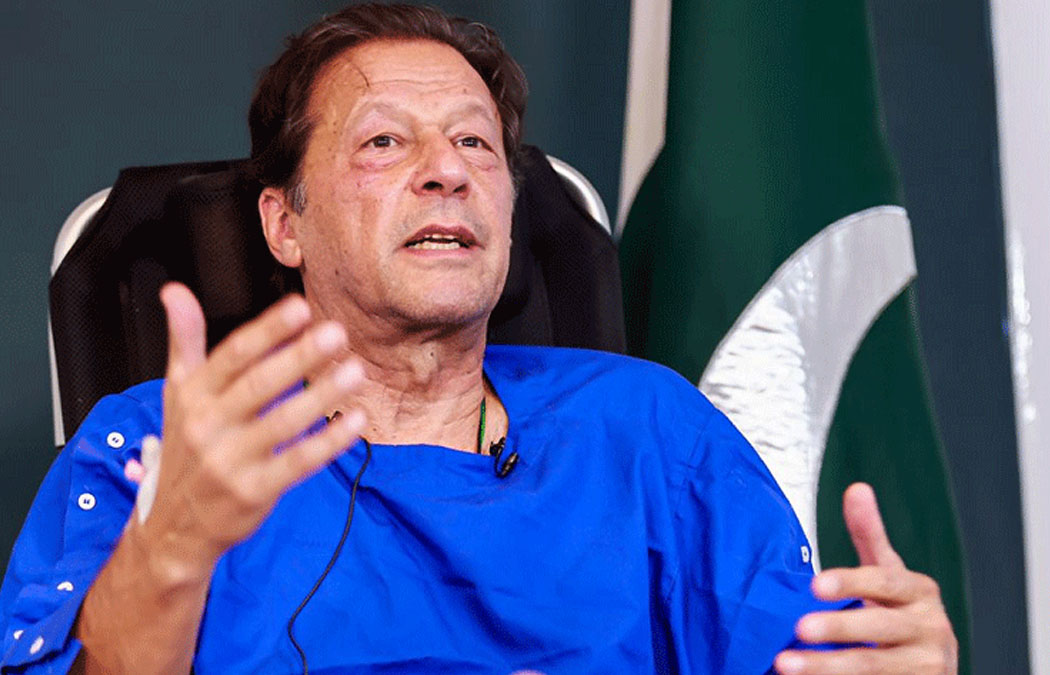
The Imran Khan Medical Procedure carried out at a federal hospital in Islamabad has triggered renewed political debate after the government confirmed that the former prime minister underwent a brief intervention last week. Officials insist the procedure was conducted on medical advice, while PTI has questioned the transparency surrounding the transfer.
The development comes amid heightened political tensions and ongoing legal proceedings involving the PTI founder.
Imran Khan Medical Procedure Conducted at PIMS
Federal Information Minister Attaullah Tarar confirmed that Imran Khan underwent a 20-minute medical procedure at the Pakistan Institute of Medical Sciences last week.
Speaking to Private TV Channel, Tarar said the PTI founder, currently incarcerated at Adiala Jail, was initially examined by eye specialists at the jail facility. Following medical advice, he was shifted to PIMS on the night of January 24.
According to the minister, doctors recommended a short intervention after further evaluation. The Imran Khan Medical Procedure was conducted with his written consent, and his vital signs remained stable throughout the process.
Tarar stated that Khan was returned to Adiala Jail the same night with prescribed medical instructions.
“He is absolutely healthy and stable,” the minister said, adding that all inmates are entitled to medical treatment under jail regulations whenever required.
PTI Raises Questions Over Transparency
While the government described the Imran Khan Medical Procedure as routine, Pakistan Tehreek-e-Insaf leaders voiced concern over what they called a “secret transfer” to PIMS.
PTI representatives alleged that neither family members nor party leadership were informed prior to the hospital move. The party has demanded that complete medical reports be shared publicly and that Khan’s personal physicians be allowed unrestricted access.
Earlier this week, PTI cited medical sources claiming that Khan had been diagnosed with central retinal vein occlusion in his right eye — a condition that, if untreated, can risk long-term vision impairment.
The matter has also reached the judiciary, with PTI lawmakers filing a petition before the Islamabad High Court seeking permission to meet the former prime minister and review his medical condition.
For international coverage of Pakistan’s political developments, global reporting is available through reputable outlets such as Reuters and the Associated Press.
Hospital Security and Confidentiality Measures
A senior doctor at PIMS, speaking on condition of anonymity, confirmed that Khan was brought to the hospital under strict security protocols late Saturday night.
Operation theatres and the anaesthesia section were reportedly cordoned off during his stay. The Imran Khan Medical Procedure continued into the early hours of Sunday before he was transferred back to Rawalpindi.
Hospital officials have not issued a detailed public medical bulletin, citing patient confidentiality norms.
Family Reaction and Opposition Response
Khan’s sister, Noreen Niazi, expressed concern over the lack of prior notification and urged authorities to share the medical reports with the family and legal counsel.
Senior PTI leader Barrister Gohar Khan reiterated the demand for transparency, arguing that secrecy surrounding the Imran Khan Medical Procedure undermines public trust.
Members of the opposition alliance also described the situation as a potential violation of constitutional and human rights protections, warning of political repercussions if access to Khan remains restricted.
For related developments, readers can explore our previous coverage on prison visitation rights and constitutional safeguards in Pakistan.
Legal and Constitutional Context
Under Pakistani jail rules, inmates are entitled to medical treatment whenever recommended by certified medical professionals. Government officials maintain that the decision to transfer Khan to PIMS was made solely on doctors’ advice.
However, constitutional experts note that family access and timely communication are equally significant components of due process, particularly in cases involving high-profile political figures.
The Imran Khan Medical Procedure has therefore evolved from a medical matter into a broader governance issue.
Why It Matters
The Imran Khan Medical Procedure carries implications beyond personal health.
Politically, it affects opposition-government dynamics at a sensitive time. Legally, it raises questions about procedural transparency and prisoner rights. Socially, it influences public confidence in state institutions. Economically, prolonged instability linked to political uncertainty can impact investor sentiment.
The handling of this case may shape institutional credibility in the months ahead.
What Happens Next
Attention now turns to whether detailed medical documentation will be released and whether independent doctors will be granted access.
If transparency concerns persist, PTI may pursue further legal remedies or political mobilisation. Institutional responses from courts and federal authorities will determine whether tensions escalate or stabilize.
Public discourse suggests sustained scrutiny rather than immediate closure.
