

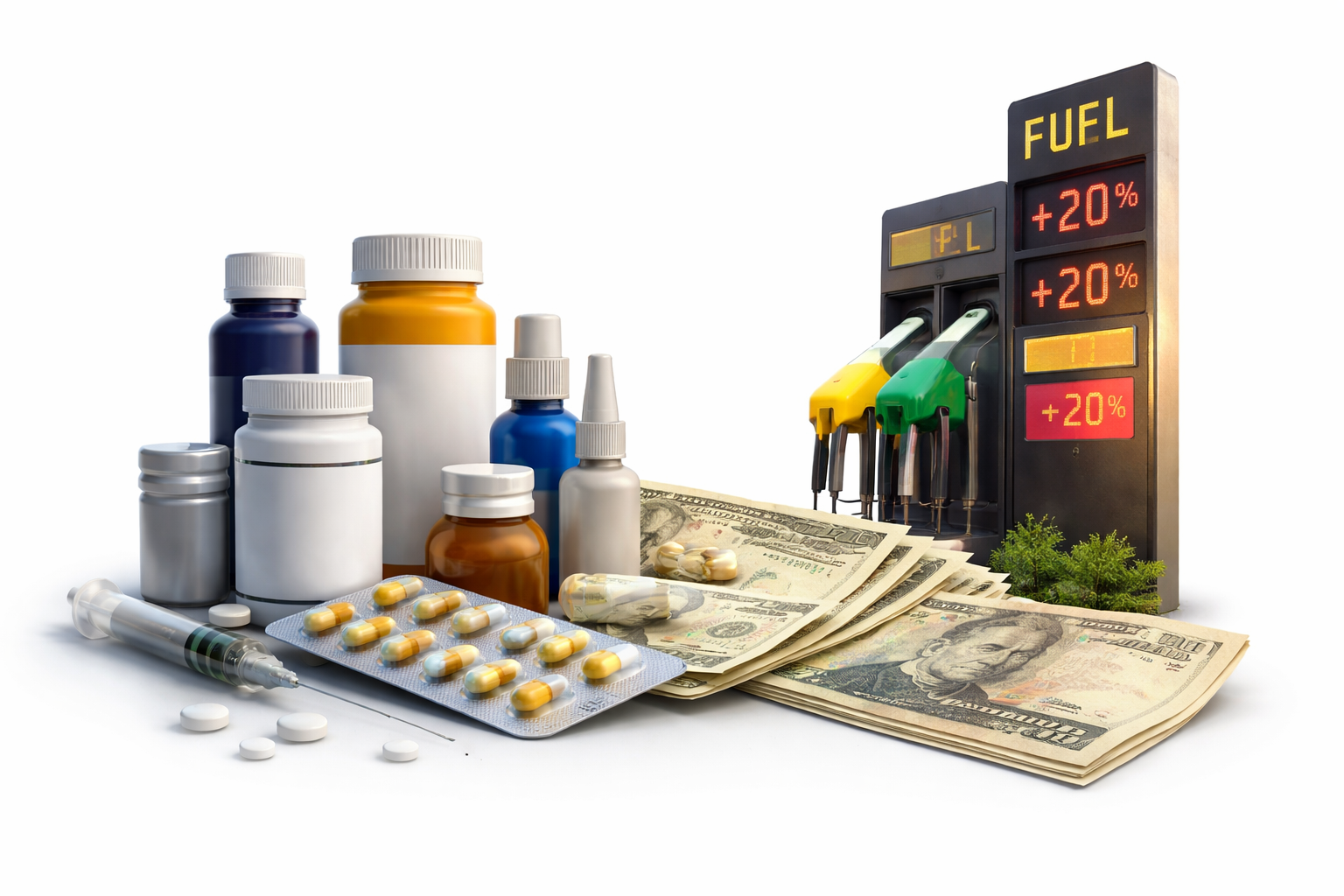
Essential Medicines Prices Unchanged: Essential medicines prices in Pakistan have remained unchanged despite a more than 20 percent surge in petrol and diesel costs, the Pakistan Pharmaceutical Manufacturers Association confirmed on Saturday, dismissing unverified media reports that had suggested otherwise.
The Karachi-based industry body said life-saving drugs including insulin, antibiotics, cardiovascular medicines, anti-hypertensives, anti-diabetics, and vaccines continue to be supplied without interruption across the country. PPMA representatives emphasized that government-regulated medicine prices have not been revised upward, even as fuel, freight, and raw material import costs have escalated in recent months.
Essential Medicines Prices Unchanged as Industry Absorbs Cost Surge
PPMA officials said domestic pharmaceutical manufacturers have internally absorbed significant cost pressures rather than transferring them to patients. Rising petroleum prices have directly inflated transportation and distribution expenses, while import costs for active pharmaceutical ingredients have increased amid ongoing regional economic disruption.
“Despite the increase in petroleum prices and higher transportation costs, the industry has not passed on the burden to patients in the case of essential medicines,” an industry official said.
The association reiterated that essential medicines remain price-controlled under government regulation, and no authority has been granted to revise those prices. Officials said both essential and non-essential medicines are currently available in sufficient quantities at outlets across Pakistan.
Ninety Percent of Pakistan’s Medicines Produced Locally
A key pillar of supply stability cited by the PPMA is the country’s high level of domestic pharmaceutical production. According to the association, approximately ninety percent of medicines consumed in Pakistan are manufactured within the country, substantially limiting exposure to global supply chain shocks.
Manufacturers confirmed they currently hold adequate stocks of raw materials and finished pharmaceutical products to meet national demand. The PPMA said production and distribution systems are functioning normally despite the challenging economic environment created by rising energy costs and import pressures.
The assurance comes as Pakistan’s broader economy has faced strain from elevated global oil prices, with the fuel surge linked to heightened tensions in the Middle East. According to Reuters, regional conflict has contributed to volatility in global energy markets, creating downstream cost pressures for import-dependent industries worldwide.
Essential Medicines Prices Unchanged But Advanced Therapies Face Supply Gap
While the PPMA’s statement offered reassurance on essential medicines, the association drew attention to a separate and unresolved problem affecting more specialised treatments.
Industry officials said a range of advanced therapies — including modern cancer medicines, vaccines, immunoglobulins, and other critical drugs — remain difficult to obtain in the market. The cause, they said, is not a production or supply chain failure but a regulatory bottleneck within the government’s own notification process.
“These include a number of modern cancer therapies, vaccines, immunoglobulins and other critical medicines, whose prices have been approved but not formally notified, preventing their regular availability in the market,” an industry official said.
The Drug Regulatory Authority of Pakistan (DRAP) has approved prices for these medicines, but the government has not yet issued the formal notifications required to allow them to enter regular market supply. The PPMA urged authorities to expedite this process, warning that the delay is creating unnecessary hardship for patients with serious and life-threatening conditions who are already managing rising treatment costs.
PPMA Urges Media Restraint Amid Unverified Reports
The PPMA statement was partly prompted by what officials described as inaccurate media coverage suggesting medicine shortages or price increases. The association called on news organisations to exercise greater caution before publishing or broadcasting unverified claims related to medicine supply.
Officials warned that sensational or inaccurate reporting risks triggering panic-buying, distorting public perceptions of medicine availability, and causing serious distress among patients who depend on continuous access to treatment.
The pharmaceutical industry reiterated its commitment to supporting Pakistan’s healthcare system and ensuring uninterrupted medicine access. However, the association stressed that the government must resolve the price notification bottleneck to ensure all critical therapies, including advanced cancer treatments and immunoglobulins, become regularly available.
Background: Pakistan’s Pharmaceutical Sector Under Pressure
Pakistan’s pharmaceutical industry has operated under compounding pressures over the past two years, including currency depreciation, rising import costs, and fluctuating global energy prices. The sector has repeatedly raised concerns with the government over the gap between regulated medicine prices and actual production costs.
DRAP has in recent periods approved price adjustments for several categories of medicines, but delays in formal government notification have created a recurring problem where approved medicines cannot legally enter the supply chain until notifications are gazetted. Industry groups say this procedural lag disproportionately affects advanced and specialised therapies, leaving patients without access to treatments that have cleared all regulatory hurdles.
According to the Associated Press, Pakistan’s broader economic situation has been shaped by sustained inflation and external account pressures, creating a difficult operating environment for manufacturing sectors dependent on imports.
Analysts say the pharmaceutical industry’s ability to maintain essential medicines prices unchanged will be tested further if fuel costs remain elevated or rise again, making government action on the notification backlog increasingly urgent.
