

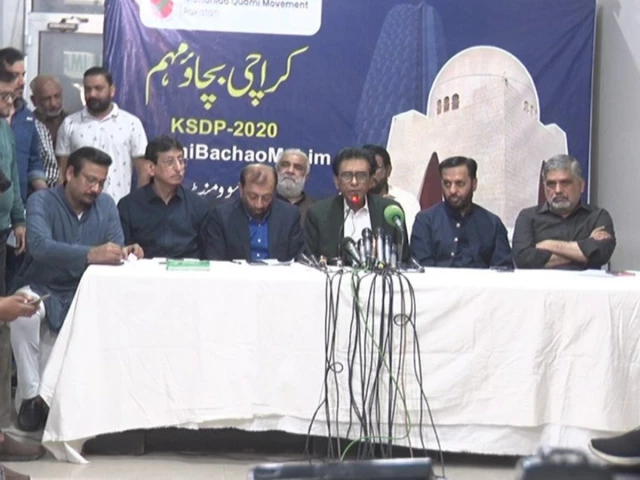
MQM-P 170 seats 80 seats statement has become a major political discussion point in Pakistan after party chairman Khalid Maqbool Siddiqui criticized justice distribution and electoral representation.
The statement was delivered during a press conference in Karachi by the leadership of Muttahida Qaumi Movement – Pakistan.
Siddiqui questioned political legitimacy, asking why electoral outcomes create conflicting narratives about governance and representation.
Political Context Behind MQM-P 170 Seats 80 Seats Statement
The MQM-P 170 seats 80 seats statement reflects a broader political debate in Pakistan regarding election outcomes, justice perception, and public trust in political institutions. The party leadership argued that political representation should accurately reflect voter mandate and democratic fairness.
The MQM-P leadership also criticized several major political parties, including Pakistan Peoples Party and Pakistan Tehreek-e-Insaf, accusing them of pursuing policies that allegedly ignored Karachi’s development needs.
Party leaders emphasized that administrative fairness, constitutional governance, and equal urban resource allocation should remain national priorities. They stated that political stability can only be achieved when all regions receive balanced development opportunities and institutional transparency is maintained.
Census Transparency Demand and Karachi Population Claim
MQM-P has repeatedly called for a transparent and credible national census conducted under strict supervision to ensure accurate population representation across Pakistan. Party leadership argued that demographic accuracy is essential for maintaining fairness in political representation, resource distribution, and development planning.
The party claimed that Karachi’s population may have crossed 40 million based on internal estimates, although they emphasized that independent verification is necessary to confirm the figure. Leaders stated that population data plays a crucial role in determining electoral strength, municipal funding, infrastructure development, and long-term urban policy planning.
According to MQM-P representatives, unreliable demographic statistics can create governance imbalances and weaken public service delivery systems. They stressed that a scientifically conducted census would help address urban management challenges, promote equitable policy formulation, and support sustainable economic growth in the country’s largest metropolitan center.
Constitutional Debate and Article 140-A
The leadership emphasized the need to fully implement local governance provisions under the Pakistani Constitution to strengthen administrative fairness. They argued that effective enforcement of Article 140-A is essential for protecting urban administrative rights, improving local service delivery, and ensuring better representation of city populations in decision-making processes.
Karachi Governance Issue
MQM-P leaders claimed that prolonged provincial administrative control had negatively affected Karachi’s development and infrastructure growth over the years. They argued that urban service delivery, public transport, sanitation systems, and municipal planning require stronger local participation and efficient management.
Party representatives stated that the issue of urban decline can only be resolved through institutional reforms, transparent resource distribution, and empowerment of local government authorities. They emphasized that Karachi’s economic importance demands modern governance structures that support sustainable city development and improved living standards for residents.
ALSO READ
Karachi Division Not Treason, Says Khalid Maqbool
Political analysts believe the MQM-P 170 seats 80 seats statement reflects growing political pressure surrounding representation politics and electoral legitimacy debates in Pakistan. The statement has intensified discussions about justice perception, power distribution, and political trust among different institutions.
Experts say that census accuracy, urban governance challenges, and federal-provincial relationship dynamics may dominate future political discourse. They believe administrative transparency and demographic verification will play an important role in shaping policy decisions, particularly in large metropolitan areas like Karachi.
Why This Matters
The debate surrounding representation politics continues to shape Pakistan’s political landscape. Issues such as census accuracy, urban population growth, and administrative fairness are becoming central to policy making discussions.
Accurate demographic data plays a key role in resource distribution, electoral boundaries, and development planning. Karachi’s governance structure remains a major topic because of its economic importance and population size.
What Happens Next
Political observers expect the issue to be discussed in parliamentary forums and public political platforms in the coming weeks. Counter-statements from other political parties may also emerge in response to MQM-P’s position.
Government authorities may face renewed pressure regarding census verification processes and local governance reforms. Analysts believe further negotiations and policy discussions could shape the future of urban administration in Pakistan
FAQ’s
What is MQM-P 170 seats 80 seats statement?
It questions justice perception in political representation.
Who made the statement?
MQM-P chairman Khalid Maqbool Siddiqui.
Which parties were criticized?
PPP, PTI, and other political groups.
Why is census mentioned?
MQM-P demands population transparency.
Will political movement continue?
Party leaders indicated future political struggle
