

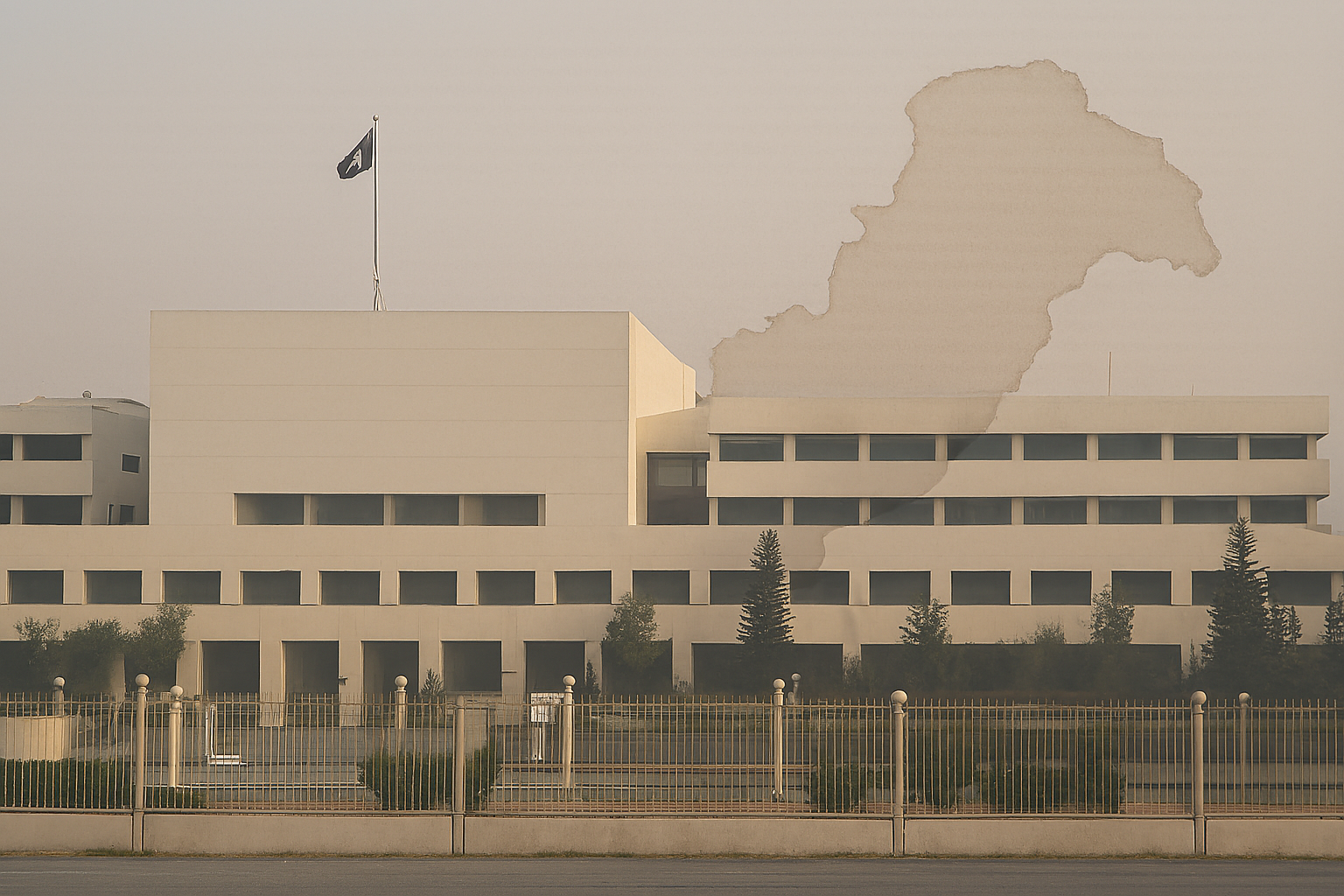
The Pakistan political landscape 2026 is no longer defined solely by electoral rivalry. Instead, it is increasingly shaped by structural questions about how the federation should function in an era of economic stress, institutional distrust, and rising public expectations.
Two interconnected debates now dominate national discourse: the proposal for a broad-based national government and the demand for creating new provinces. Both ideas reflect deeper constitutional and governance tensions. Whether these discussions translate into reform or remain political rhetoric will significantly influence Pakistan’s institutional future.
Pakistan Political Landscape 2026 and Federal Evolution
Pakistan’s federal architecture is rooted in the 1973 Constitution, which attempted to balance national unity with provincial autonomy. Over decades, however, centralization complaints persisted.
A major shift occurred with the Eighteenth Amendment, which devolved authority over education, health, and local governance to provinces. Yet critics argue decentralization stopped at the provincial level, failing to empower districts and municipalities.
Within the Pakistan political landscape 2026, federal reform has become central to policy discourse. Policymakers are debating whether administrative redesign, fiscal recalibration, or stronger local governance offers a sustainable path forward.
According to a detailed analysis by Reuters, federal reforms remain politically sensitive across developing democracies.
Similarly, constitutional governance frameworks have been extensively studied by the United Nations Development Programme, highlighting how federal balance influences long-term stability.
These comparative insights are increasingly referenced in Pakistan’s reform discussions.
Timeline: Key Political and Constitutional Developments
1973 – Constitution establishes parliamentary federal structure
2010 – Eighteenth Amendment expands provincial autonomy
2018–2022 – Intensified political polarization and economic strain
2023–2024 – Regional resolutions revive Hazara and South Punjab debates
2025 – National government proposals re-emerge amid fiscal pressure
2026 – Structural reform discussions dominate parliamentary and media discourse
This timeline shows that the current debate is not sudden but the culmination of long-standing institutional tensions.
National Government Debate in Pakistan Political Landscape 2026
Economic pressures have reignited calls for a national unity government. Supporters argue that adversarial politics has hindered reform implementation and that cross-party consensus is essential for economic stabilization.
Observers note that Pakistan political landscape 2026 reflects institutional tension between accountability and stability. While unity governments may reduce short-term polarization, critics warn that weakening opposition oversight risks undermining democratic checks and balances.
The debate therefore extends beyond personalities; it concerns structural governance capacity.
Constitutional Path to New Provinces in Pakistan Political Landscape 2026
The Constitution provides a clear yet demanding pathway for creating new provinces. Any change to provincial boundaries requires:
• Two-thirds majority in the concerned provincial assembly
• Two-thirds majority in the National Assembly
This high threshold safeguards federal stability but makes reform politically difficult.
Electoral calculations are reshaping the Pakistan political landscape 2026 as parties assess demographic representation, Senate balance, and fiscal redistribution implications. Proposals for South Punjab and Hazara illustrate how regional aspirations intersect with national politics.
Fiscal Federalism and Pakistan Political Landscape 2026
The National Finance Commission (NFC) Award remains central to federal-provincial relations. Revenue distribution formulas determine development funding and administrative capacity.
Fiscal debates continue to influence Pakistan political landscape 2026, particularly regarding how new provinces would alter revenue allocation. Redistribution could shift power balances in Parliament and provincial assemblies.
Financial implications therefore remain one of the most significant barriers to consensus.
Political Stakes in Pakistan Political Landscape 2026
Party positions often reflect strategic considerations.
Some advocate smaller administrative units to improve service delivery. Others caution that excessive fragmentation could intensify ethnic mobilization and weaken the federation.
Population growth—now exceeding 240 million—adds urgency to governance reform. Comparative references to India and Nigeria are frequently cited, yet contextual differences complicate direct parallels.
Within the Pakistan political landscape 2026, structural reform has become intertwined with electoral strategy, institutional trust, and fiscal recalibration.
Governance Reform or Federal Risk?
Supporters argue that administrative expansion can enhance representation and efficiency. Critics warn of identity-based mobilization and fiscal fragmentation.
The core question remains: should reform focus on redrawing boundaries or strengthening institutions within the existing framework?
Institutional maturity—not merely structural redesign—may ultimately determine outcomes.
What Happens Next
Three possible trajectories appear:
- Incremental reform through stronger local governments
- Selective creation of new provinces via political consensus
- Reform stagnation amid polarization
Economic stabilization is likely to dominate immediate priorities. Constitutional restructuring, given its complexity, may require prolonged consensus-building.
Conclusion
The Pakistan political landscape 2026 reflects a federation at a constitutional crossroads. Calls for a national government signal frustration with partisan gridlock. Demands for new provinces express regional grievances and administrative dissatisfaction.
Yet structural reform requires more than rhetoric. Sustainable change depends on institutional accountability, fiscal clarity, and political maturity. Whether Pakistan pursues territorial restructuring or governance strengthening, the underlying objective remains restoring citizen trust.
FAQs
Why is the new provinces debate intensifying in 2026?
Governance dissatisfaction, fiscal disputes, and regional representation concerns have revived structural reform discussions.
Is it constitutionally easy to create a new province?
No. It requires a two-thirds majority in both the relevant provincial assembly and the National Assembly.
Would a national government solve economic challenges?
It may reduce short-term political friction, but long-term stability depends on structural reforms and institutional accountability.
