

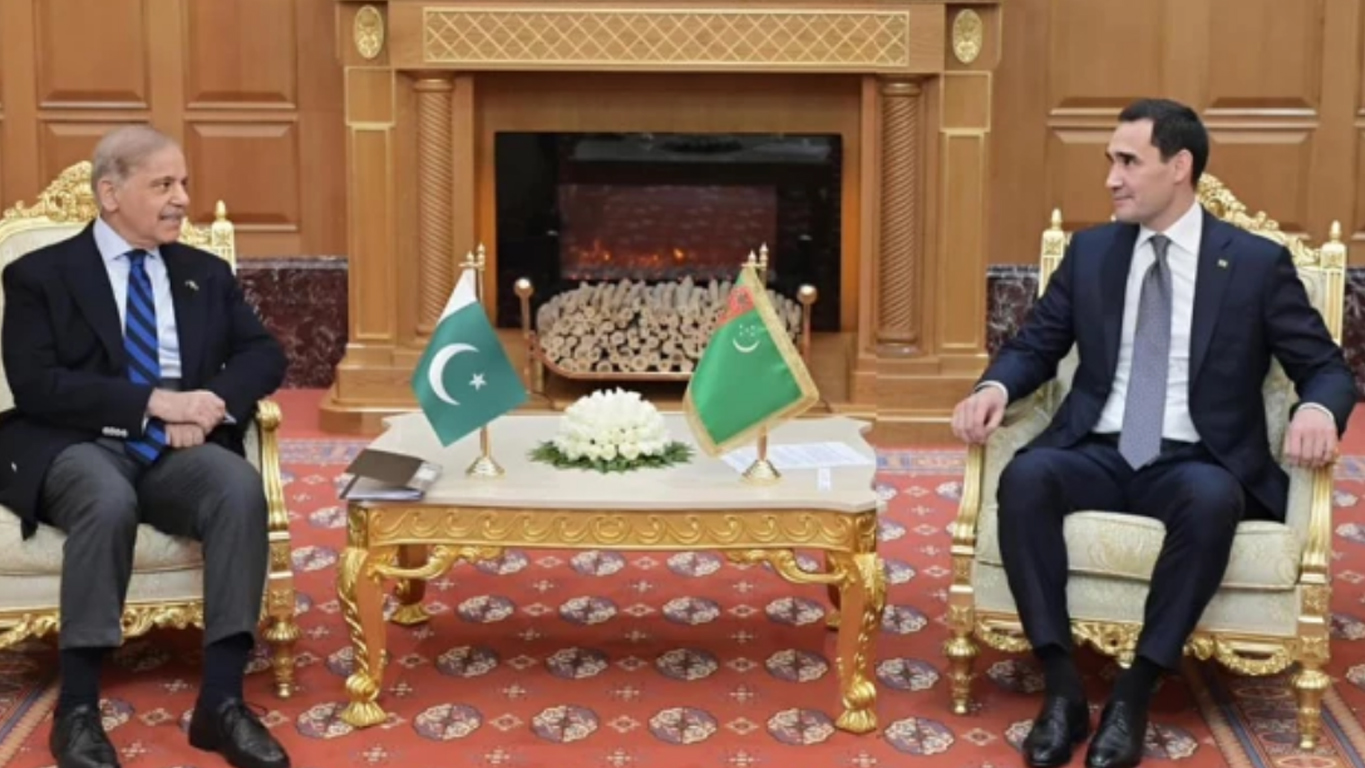
Pakistan Turkmenistan Connectivity Drives Regional Economic Diplomacy
Pakistan Turkmenistan connectivity is steadily emerging as a key pillar of Pakistan’s regional economic diplomacy as Prime Minister Shehbaz Sharif continues strengthening bilateral relations with Turkmenistan. The latest diplomatic engagement between the two nations focused on expanding trade corridors, energy cooperation, and maritime access through strategic port infrastructure. The visit to Ashgabat reflected Pakistan’s long-term strategy of transforming into a regional transit trade economy connecting Central Asia with South Asia and global markets.
During high-level diplomatic discussions, PM Shehbaz met with Turkmen President Serdar Berdimuhamedov and emphasized that economic cooperation and diplomatic stability are closely linked. Both leaders reaffirmed their commitment to expanding cooperation in trade, energy, communication infrastructure, and cultural exchanges.
Pakistan Turkmenistan Connectivity and Regional Trade Expansion
Pakistan Turkmenistan connectivity plays a crucial role in expanding regional trade networks across Eurasia. Pakistan is strategically positioned between Central Asia, China, the Middle East, and global maritime trade routes. Economic policymakers believe that strengthening connectivity will improve Pakistan’s export competitiveness while providing Turkmenistan with greater access to international markets.
Diplomatic analysts suggest that trade expansion between Pakistan and Turkmenistan could help reduce logistics costs for Central Asian countries that currently face transportation limitations due to their landlocked geography. Pakistan’s economic diplomacy strategy focuses on leveraging its geographic advantage to promote transit trade and regional supply chain integration.
Both countries are also exploring new bilateral trade agreements that could increase commercial exchange volumes. Private sector investment is expected to play a significant role in strengthening economic cooperation.
Pakistan Turkmenistan connectivity is strongly supported by maritime infrastructure development, particularly through Karachi and Gwadar ports. These ports serve as major trade gateways linking Central Asia with international shipping routes.
Gwadar Port, developed under the China Pakistan Economic Corridor initiative, is expected to become a global logistics and transshipment center. International trade experts believe Gwadar could significantly improve trade access for landlocked Central Asian economies seeking access to warm-water maritime shipping lanes.
Karachi Port continues to function as Pakistan’s primary commercial shipping center. The government is investing in digital customs automation and modern cargo handling technologies to improve port efficiency and reduce shipping delays.
Improved maritime connectivity under Pakistan Turkmenistan connectivity initiatives could help Turkmenistan access South Asian consumer markets and European trade corridors through maritime shipping networks.
According to international news reports, regional connectivity projects are becoming increasingly important for global economic integration.
Energy Security and Pakistan Turkmenistan Connectivity
Energy cooperation remains one of the most important aspects of Pakistan Turkmenistan connectivity. The Turkmenistan–Afghanistan–Pakistan–India gas pipeline project represents a major regional energy infrastructure initiative.
The TAPI pipeline is designed to transport natural gas from Turkmenistan’s energy reserves to South Asian markets, helping address Pakistan’s growing energy demand. Energy economists believe that successful completion of this project could significantly improve regional energy security.
Pakistan’s Planning Minister Ahsan Iqbal previously held discussions with Turkmen leadership regarding pipeline implementation progress, financing mechanisms, and security arrangements along pipeline routes.
Energy analysts suggest that TAPI could reduce electricity production costs while supporting Pakistan’s industrial manufacturing sector.
Diplomatic Trust and Pakistan Turkmenistan Connectivity
Diplomatic relations between Pakistan and Turkmenistan are based on mutual trust and humanitarian cooperation. Pakistan expressed appreciation for Turkmenistan’s assistance in evacuating Pakistani nationals from Iran during regional tensions earlier this year.
Such humanitarian collaboration strengthens political confidence between both countries and demonstrates the practical benefits of Pakistan Turkmenistan connectivity beyond economic cooperation.
Turkmenistan’s neutral foreign policy approach has helped maintain regional diplomatic balance and promote peaceful cooperation across Central Asia.
Peace Diplomacy and Pakistan Turkmenistan Connectivity
Pakistan and Turkmenistan both support international peace diplomacy initiatives under the International Year of Peace and Trust 2025.
Turkmenistan has actively hosted global peace conferences promoting dialogue-based conflict resolution and international cooperation. Pakistan supports these initiatives because regional peace directly supports economic growth and trade stability.
PM Shehbaz’s participation in international peace forums reflects Pakistan’s diplomatic focus on economic development through regional stability.
Economic Impact of Pakistan Turkmenistan Connectivity
Strong Pakistan Turkmenistan connectivity could produce long-term economic benefits for both nations. Trade expansion could increase export opportunities for Pakistan’s industrial and agricultural sectors.
Infrastructure investment could generate employment opportunities in construction, shipping, and logistics sectors. Foreign investors often prioritize countries with strong transport networks and stable diplomatic relations.
Economic experts predict that improved connectivity could enhance Pakistan’s position in Eurasian trade networks.
Future Prospects of Pakistan Turkmenistan Connectivity
Future cooperation may include expansion of CPEC-related infrastructure projects, digital communication technology partnerships, and tourism cooperation programs.
Student exchange programs and cultural cooperation initiatives are also expected to strengthen people-to-people relations. Such programs help build long-term diplomatic relationships beyond economic agreements.
Geopolitical analysts predict increasing Central Asia–South Asia economic integration over the next decade.
🔮 What Happens Next?
Future developments may include faster TAPI pipeline construction, new trade agreements, and expanded investment cooperation between Pakistan and Turkmenistan.
International diplomatic engagement between both countries is expected to remain strong due to shared economic interests and regional development goals.
FAQs
What is Pakistan Turkmenistan connectivity?
It refers to trade, energy, and transport cooperation between Pakistan and Turkmenistan.
Why is Gwadar port important?
Gwadar provides Central Asian countries access to global maritime trade routes.
What is the TAPI pipeline?
It is a transnational natural gas pipeline connecting Turkmenistan to South Asian markets.
How does this benefit Pakistan?
It improves energy security, trade growth, and economic investment opportunities.
