

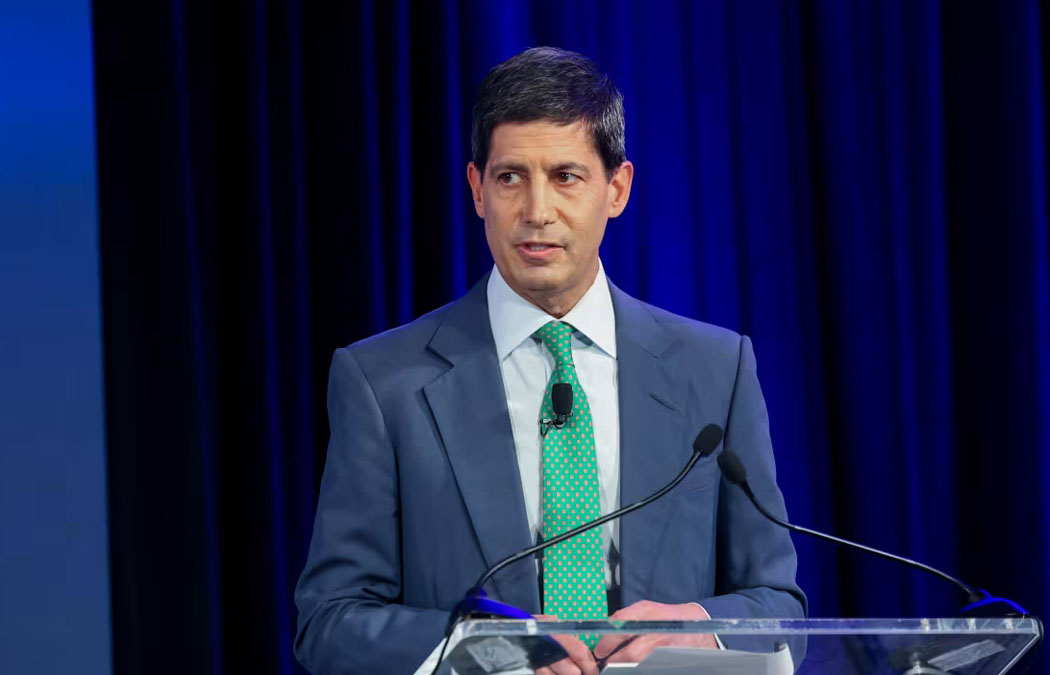
Trump Nominates Kevin Warsh as the next Chair of the Federal Reserve, marking a pivotal moment for US monetary policy and global financial markets. The nomination concludes a closely watched search to replace current Fed Chair Jerome Powell, whose term expires in May.
The decision is expected to shape the direction of interest rates, inflation control, and central bank independence.
Trump Nominates Kevin Warsh to Lead the Federal Reserve
US President Donald Trump formally announced that he has selected Kevin Warsh, a former Federal Reserve governor, to serve as the next Chair of the Federal Reserve.
Posting on his Truth Social platform, Trump praised Warsh’s leadership credentials and long-standing experience in financial markets.
“I have known Kevin for a long period of time, and have no doubt that he will go down as one of the GREAT Fed Chairmen,” Trump wrote, expressing confidence in Warsh’s ability to steer the central bank.
The announcement follows months of speculation over who would succeed Jerome Powell, whose tenure has been marked by aggressive rate hikes to combat inflation.
For broader international financial coverage, developments around the Federal Reserve are closely tracked by outlets such as Reuters and the Associated Press.
Background of Kevin Warsh
Warsh, a New York native, previously served as a mergers and acquisitions banker at Morgan Stanley before joining the Federal Reserve Board during the global financial crisis.
During his earlier tenure at the Fed, Warsh was involved in critical policy decisions aimed at stabilizing financial markets. He was also considered for the top Fed position during Trump’s first presidential term but was not ultimately selected.
His policy views have at times aligned with positions advocated by the Trump administration, particularly on economic growth and regulatory frameworks.
Shortlist and Selection Process
Warsh emerged from a shortlist of four prominent candidates. Other names reportedly considered included current Fed Governor Christopher Waller, BlackRock executive Rick Rieder of BlackRock, and Trump’s economic adviser Kevin Hassett.
The selection process was described by analysts as high-profile and politically sensitive, given recent tensions between the White House and the Federal Reserve.
Trump has repeatedly criticized Powell for not lowering interest rates swiftly enough, arguing that tighter monetary policy has constrained economic momentum.
Federal Reserve Independence Under Scrutiny
The nomination comes at a time when the independence of the Federal Reserve has become a subject of public debate.
Recent developments have included reported attempts to remove Fed Governor Lisa Cook and scrutiny over Powell’s management of Federal Reserve headquarters renovations.
Market analysts caution that any perception of diminished central bank independence could affect investor confidence, US Treasury yields, and global currency stability.
The principle of central bank autonomy has historically been seen as critical for maintaining price stability and preventing political interference in monetary policy decisions.
Economic Challenges Ahead
If confirmed by the US Senate, Warsh will inherit an economy navigating persistent inflationary pressures, a softening labor market, and ongoing debate over the trajectory of interest rates.
The Federal Reserve operates under a dual mandate: ensuring price stability while promoting maximum employment. Balancing these objectives amid political expectations will be one of Warsh’s most significant tests.
Financial markets are expected to closely analyze his statements on rate policy, inflation targeting, and long-term growth strategy in the coming months.
Why It Matters
The decision that Trump Nominates Kevin Warsh carries global implications.
Politically, it signals a potential recalibration of relations between the White House and the Federal Reserve. Economically, leadership at the central bank influences borrowing costs, mortgage rates, and business investment worldwide. Financially, global markets depend on Fed credibility to maintain stability.
Any shift in policy tone could impact emerging markets, stock indices, and currency valuations beyond US borders.
What Happens Next
Warsh’s nomination now moves to the US Senate for confirmation hearings. Lawmakers are expected to question him extensively on monetary independence, inflation control strategy, and commitment to the Fed’s dual mandate.
Markets may remain volatile until clarity emerges on his policy direction. Analysts predict heightened scrutiny over upcoming Federal Open Market Committee communications.
If confirmed, Warsh will assume office in May, coinciding with a crucial phase in US economic recovery and global financial recalibration.
