

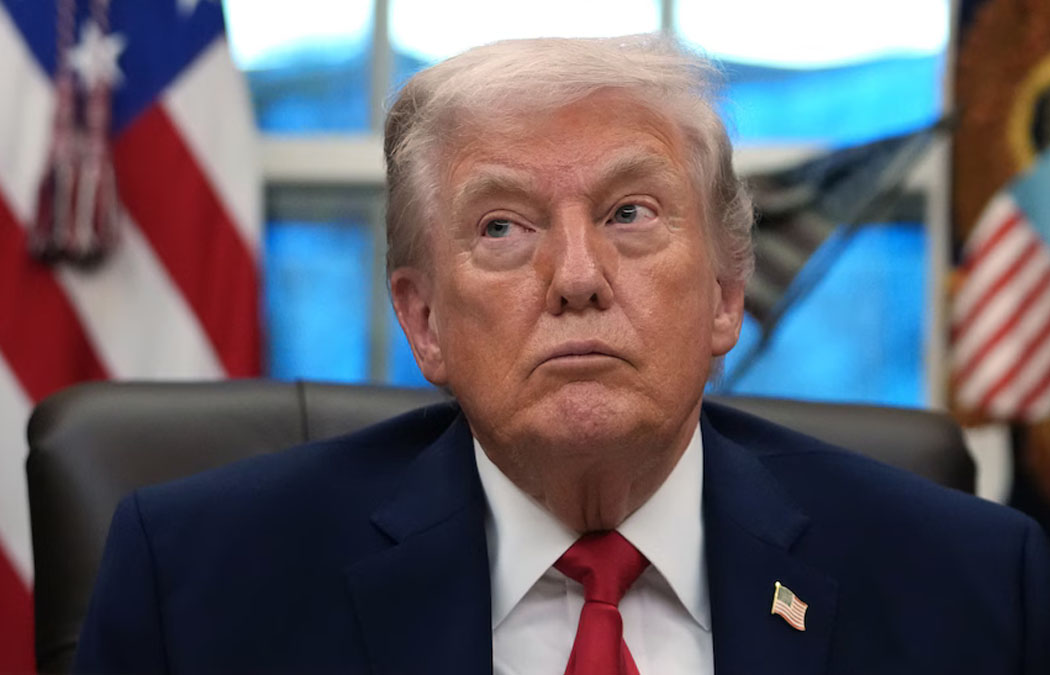
US President Donald Trump expressed Thursday that he hopes to avert Military Action Against Iran, which has threatened to strike American bases and aircraft carriers if attacked.
Trump confirmed ongoing communications with Tehran, leaving the door open for diplomacy even as he previously warned that time was “running out” for Iran. The United States has deployed a large naval fleet to the region as a show of strength.
Asked about potential talks with Iran, Trump told reporters, “I have had and I am planning on it,” adding: “We have a group headed out to a place called Iran, and hopefully we won’t have to use it.” He made the remarks during the premiere of a documentary about his wife, Melania.
As rhetoric escalates in both Washington and Brussels, and Iran issues stark warnings, UN Secretary-General Antonio Guterres urged renewed nuclear negotiations “to avoid a crisis that could have devastating consequences in the region.”
Iranian military officials, however, signaled that any U.S. action would provoke a swift and decisive response. Brigadier General Mohammad Akraminia told state television that American aircraft carriers have “serious vulnerabilities” and many U.S. bases in the Gulf are “within the range of our medium-range missiles.”
“If such a miscalculation is made by the Americans, it will certainly not unfold the way Trump imagines — carrying out a quick operation and then, two hours later, tweeting that the operation is over,” he warned.
A Gulf official, speaking to AFP, said concerns over a U.S. strike on Iran are “very clear,” highlighting the potential for regional chaos, economic disruption, and soaring oil and gas prices.
Regional Diplomacy and EU Pressure
Qatar’s leader Sheikh Tamim bin Hamad Al Thani and Iran’s President Masoud Pezeshkian discussed efforts to de-escalate tensions and promote stability, according to Qatar News Agency.
Meanwhile, the European Union labeled Iran’s Islamic Revolutionary Guard Corps (IRGC) a “terrorist organization” over its crackdown on recent protests. EU chief Ursula von der Leyen described the designation as “overdue,” saying, “‘Terrorist’ is indeed how you call a regime that crushes its own people’s protests in blood.”
Iran condemned the move, calling it “illogical, irresponsible and spite-driven,” accusing the EU of acting under the influence of the United States and Israel. Iranian officials have blamed Washington and Tel Aviv for instigating recent protests, describing them as hijacked by “riots” and a “terrorist operation” targeting economic grievances.
Public Sentiment in Tehran
Amid the growing tensions, many Iranians voiced grim resignation. A 29-year-old waitress said on condition of anonymity, “I think the war is inevitable and a change must happen. It can be for worse, or better. I am not sure. I am not in favour of war. I just want something to happen that would result in something better.”
Another 29-year-old woman, unemployed and living in northern Tehran, said, “I believe that life has highs and lows and we are now at the lowest point.”
Trump had previously warned of military action if protesters were killed during demonstrations in late December, which peaked in early January. More recently, his focus has shifted toward Iran’s nuclear program, with the West suspecting Tehran of pursuing an atomic bomb.
Iran acknowledges thousands of deaths during the protests—reportedly over 3,000—but claims most victims were security personnel or bystanders killed by rioters. State-sponsored billboards in Tehran, including one depicting an American aircraft carrier being destroyed, underscore the authorities’ messaging.