

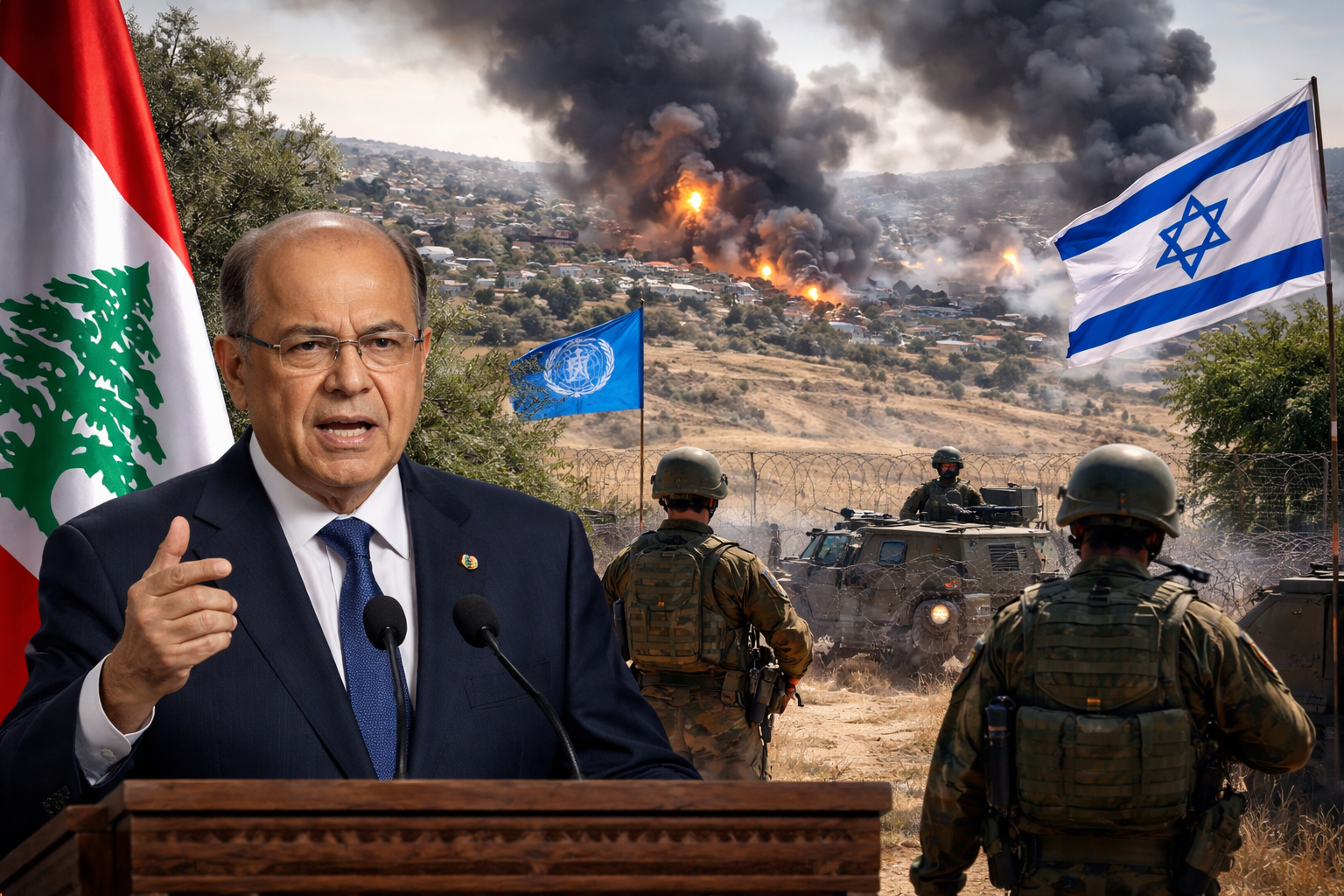
Lebanon Israel talks have entered global diplomatic discussion after Lebanese President Michel Aoun publicly called for dialogue with Israel to resolve the escalating Hezbollah conflict. The proposal comes as Israeli military strikes continue targeting Hezbollah positions near the border.
Diplomatic Push Toward Dialogue
The discussion around Lebanon Israel talks intensified after President Michel Aoun urged direct dialogue aimed at establishing what he described as “permanent security and stability.” His remarks signal one of the most explicit appeals for diplomacy from Lebanon’s leadership in recent years.
Aoun emphasized that sustained peace cannot be achieved solely through military operations. Instead, he suggested that diplomatic engagement—possibly with international mediation—could provide a framework for resolving tensions that have persisted for decades.
According to international reporting by Reuters, the Lebanese leadership believes diplomatic channels may reduce the risk of a wider regional conflict that could destabilize both Lebanon and neighboring states.
Meanwhile, Israeli forces continue to conduct operations targeting Hezbollah infrastructure near the southern border. Israeli officials argue these strikes are necessary to prevent cross-border attacks and neutralize what they describe as an immediate security threat.
READ MORE: Iranian Kurdish Opposition Groups Ready but Holding Back Amid Iran War
Escalation Along the Border
Tensions between Israel and Hezbollah have remained volatile for years, but recent developments have intensified concerns among regional observers.
Hezbollah, a powerful political and military organization within Lebanon, maintains a significant presence in the country’s south. Israel considers the group a direct security threat due to its missile capabilities and cross-border activities.
International organizations such as the United Nations have repeatedly urged both sides to exercise restraint. UN peacekeeping forces stationed in southern Lebanon under the UNIFIL mandate continue to monitor developments along the border.
Reports cited by Associated Press suggest that diplomatic intermediaries may soon attempt to facilitate indirect communication between the parties, particularly if hostilities escalate further.
Regional Context
The call for Lebanon Israel talks arrives during a period of heightened geopolitical tension across the Middle East.
Hezbollah’s strategic alliance with Iran has long shaped the regional balance of power. Israel, in response, has pursued an aggressive security policy aimed at limiting the group’s military capabilities.
Lebanon itself faces a complex political and economic environment. Years of financial crisis, political instability, and infrastructure challenges have weakened the country’s ability to manage prolonged conflict.
In this context, diplomatic dialogue could serve as a crucial mechanism for preventing further escalation.
Observers believe that international actors—including European governments and the United States—will closely monitor the situation. Any progress toward negotiations could influence broader regional stability and potentially reshape alliances within the Middle East.
Why It Matters
The significance of Lebanon Israel talks extends beyond bilateral relations between the two countries.
Socially, continued conflict threatens the safety and livelihoods of civilians living near the border regions. Communities in southern Lebanon and northern Israel remain vulnerable to escalating military exchanges.
Politically, Aoun’s proposal represents a potential shift in Lebanon’s approach to dealing with Israel. Diplomatic engagement, if pursued seriously, could signal a new direction in the country’s foreign policy.
Economically, prolonged instability could further strain Lebanon’s already fragile economy. International investors and aid organizations closely watch developments that might affect the country’s recovery efforts.
For the broader public, the possibility of dialogue raises cautious optimism that diplomacy may reduce the risk of a wider regional war.
What Happens Next
Diplomatic observers believe that the next phase will likely involve indirect communication through international mediators. The United Nations may play a central role in opening initial channels for dialogue between Beirut and Tel Aviv.
However, Israel has not yet issued a formal response to Aoun’s proposal. Analysts suggest that Israeli leaders may wait to assess Hezbollah’s actions along the border before committing to any negotiation framework.
Public reaction within Lebanon remains mixed. Some citizens view diplomacy as the only realistic path toward stability, while others doubt whether meaningful negotiations with Israel are politically feasible.
Regional powers—including Iran and several Gulf states—could also influence the direction of any future discussions. Their positions may determine whether the diplomatic momentum surrounding Lebanon Israel talks develops into formal negotiations.
FAQs
What did President Michel Aoun propose?
President Michel Aoun called for diplomatic dialogue with Israel aimed at achieving permanent security and stability while reducing the risk of further conflict.
Are Israeli strikes still continuing?
Yes, Israeli forces continue targeting Hezbollah infrastructure along the Lebanon-Israel border in response to perceived security threats.
Has Israel officially responded to Lebanon’s proposal?
As of now, Israel has not issued a formal response regarding the proposed talks.
Why is Hezbollah central to the conflict?
Hezbollah is a powerful armed and political group in Lebanon backed by Iran. Israel considers it a major security threat due to its missile arsenal and cross-border operations.
Could the United Nations mediate the talks?
The United Nations could serve as a neutral mediator to facilitate dialogue between Lebanon and Israel, particularly through its UNIFIL mission in southern Lebanon.
