

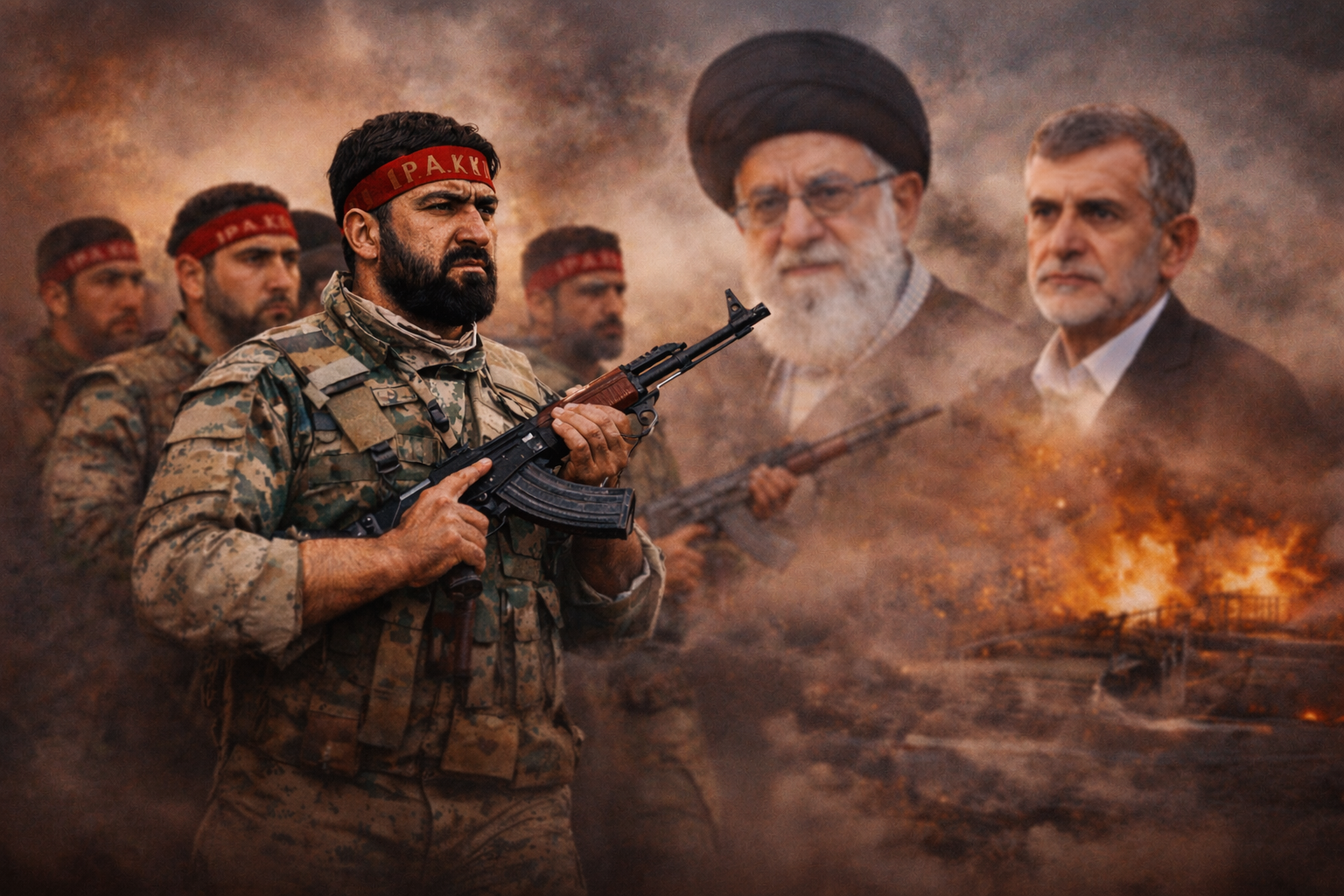
Iranian Kurdish Opposition Groups say they are prepared to challenge Tehran if the ongoing regional conflict escalates further, but for now they are choosing to hold back while closely monitoring developments in the war involving the United States, Israel, and Iran.
As tensions continue to rise across the Middle East following military confrontations between Washington, Tel Aviv, and Tehran, leaders of Iranian Kurdish Opposition Groups say their forces remain organized and ready but are avoiding immediate military action inside Iranian territory.
Iranian Kurdish Opposition Groups Monitoring the War
Speaking in an interview from Washington, Kurdish political figure Khalid Azizi, spokesperson for the Democratic Party of Iranian Kurdistan (KDPI), said Kurdish fighters are observing the evolving situation carefully.
According to Azizi, Iranian Kurdish Opposition Groups have no plans to launch a ground offensive at this stage. Instead, they are evaluating how the broader regional conflict unfolds before making any strategic decisions.
Recent reports also suggested that former US President Donald Trump may have spoken with Kurdish leader Mustafa Hijri, head of the KDPI, as Washington explores possible Kurdish involvement in pressuring Iran.
Azizi declined to confirm whether such a conversation took place.
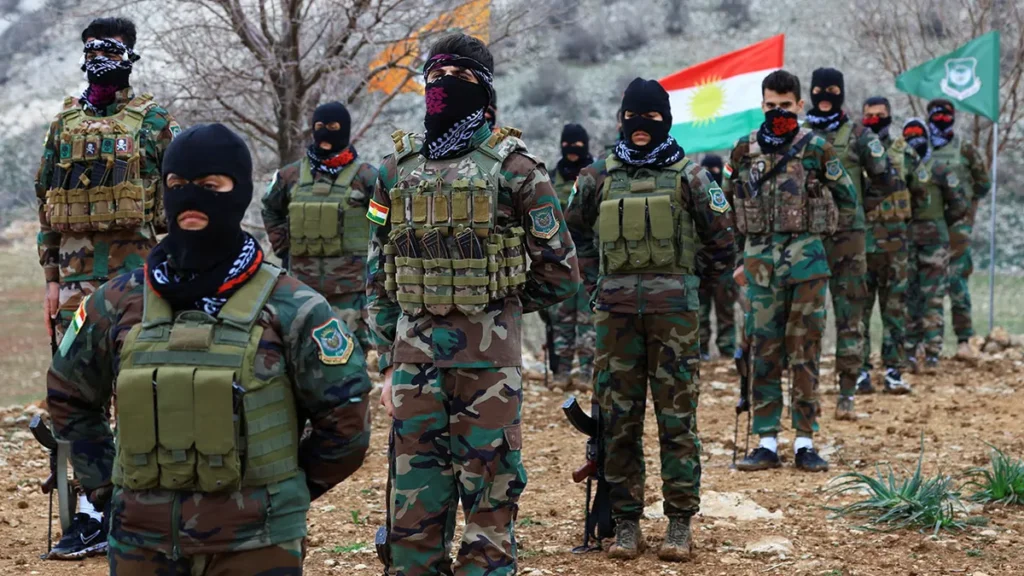
Kurdish Fighters Remain Prepared Despite Past Attacks
Leaders of Iranian Kurdish Opposition Groups say they remain committed to resisting the Iranian government despite facing significant military retaliation in the past.
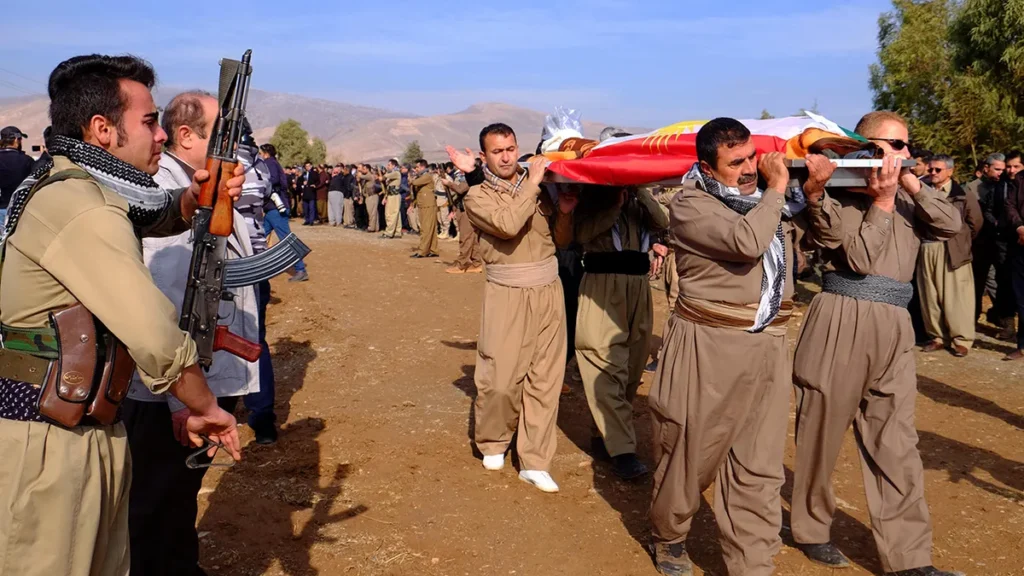
Azizi recalled a 2018 incident when Iran’s Islamic Revolutionary Guard Corps launched ballistic missiles at the KDPI headquarters in Koy Sanjaq in Iraq’s Kurdistan region during a leadership meeting.
The strike killed at least 18 people and injured dozens, including Azizi himself.
“We have been targeted by the Islamic Republic,” Azizi said, recalling how the missile attack struck his headquarters during the meeting.
Despite the risks, Iranian Kurdish Opposition Groups say their resistance movement remains strong after decades of confrontation with Tehran.
Kurdish Political Alliance Strengthens Coordination
In recent months, Iranian Kurdish Opposition Groups have taken a major political step by forming a joint alliance aimed at strengthening cooperation between different Kurdish factions.
The alliance, known as the Coalition of Political Forces of Iranian Kurdistan, brings together several historically divided Kurdish political movements that oppose Iran’s Islamic Republic.
According to Azizi, the formation of this coalition has been welcomed by Kurdish communities and other Iranian opposition groups.
Political analysts believe that increased coordination among Iranian Kurdish Opposition Groups could play an important role if the current regional conflict expands further.
Kurdish Leaders Urge Political Strategy Alongside Military Pressure
Azizi stressed that the future of Iran will not depend solely on military operations. Instead, he argued that political movements and internal public pressure will ultimately determine whether meaningful change occurs in the country.
While the ongoing war has weakened parts of Iran’s military infrastructure, Iranian Kurdish Opposition Groups believe the Iranian government remains firmly in power.
“There is currently no large-scale uprising inside Iran,” Azizi said, explaining that regime change would require stronger domestic political momentum.
He also urged Western governments to support coordination among Iranian opposition movements rather than focusing only on military pressure.
Iran’s Multi-Ethnic Reality and Kurdish Role
Iran is home to numerous ethnic groups including Persians, Kurds, Azeris, Arabs, and Baluch communities. Kurdish political leaders say the country’s long-term stability will depend on building a political system that represents all ethnic groups.
Leaders of Iranian Kurdish Opposition Groups argue that any future political roadmap for Iran must include the participation of minority communities.
According to Azizi, Kurdish political movements are advocating for a democratic system that guarantees representation and rights for all ethnic groups within Iran.
Observers say that the stance of Iranian Kurdish Opposition Groups reflects a broader effort to position themselves as political stakeholders in any future transformation of Iran’s political system.
Regional War Raises Uncertainty for Kurdish Forces
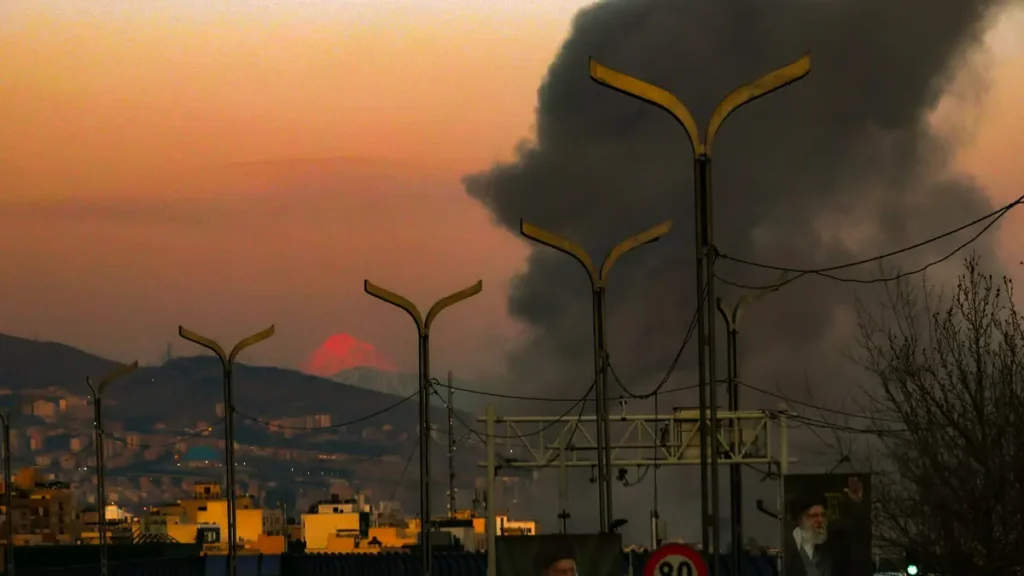
The ongoing confrontation between the United States, Israel, and Iran has created significant uncertainty across the region.
Military analysts say the conflict could expand if proxy groups or regional allies become directly involved. Kurdish groups, many of which operate from bases in Iraq’s Kurdistan region, are closely monitoring these developments.
For now, Iranian Kurdish Opposition Groups remain in a “holding pattern,” according to Azizi.
“We have the ability and the capacity,” he said. “But it is not easy right now for us to make any decision regarding entering Iranian Kurdistan.”
He added that starting a war is easy, but ending one is far more complicated.
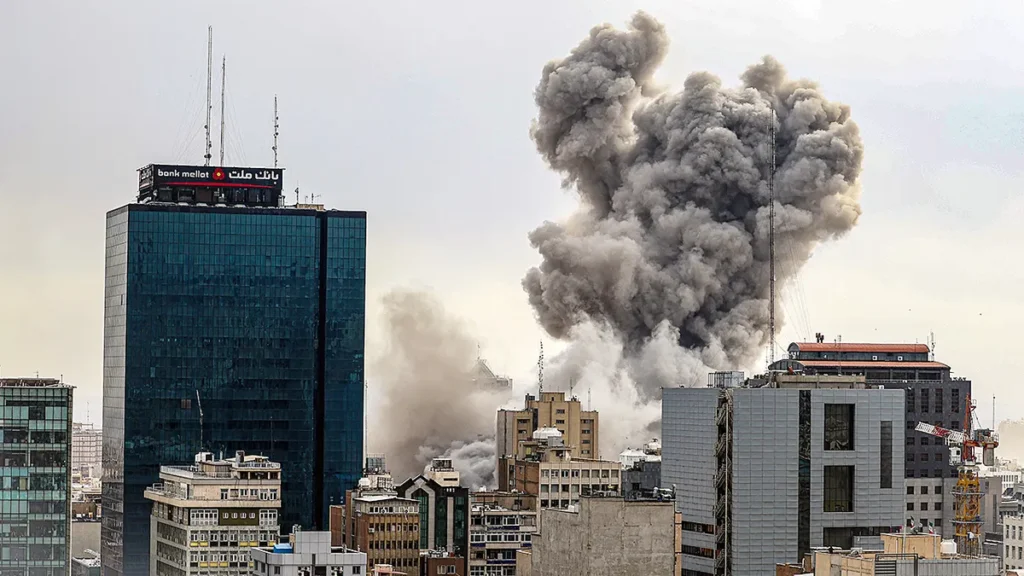
What Happens Next?
As the regional conflict continues, Iranian Kurdish Opposition Groups may become an important factor in the broader geopolitical equation.
If the war escalates or internal unrest grows inside Iran, Kurdish factions could potentially play a larger role in challenging Tehran’s authority.
However, for now, Kurdish leaders say they are waiting for clearer developments on the battlefield and within Iranian society before making any major decisions.
The coming weeks could determine whether Iranian Kurdish Opposition Groups remain observers or emerge as active players in the unfolding regional crisis.
FAQs
Q1: Who are the Iranian Kurdish Opposition Groups?
Iranian Kurdish Opposition Groups include political and armed movements such as the Democratic Party of Iranian Kurdistan (KDPI) that oppose Iran’s Islamic Republic.
Q2: Why are Iranian Kurdish Opposition Groups not launching attacks now?
They say the broader regional war is still evolving and ground operations are not currently part of the conflict.
Q3: Where are these Kurdish groups based?
Most Iranian Kurdish Opposition Groups operate from bases in Iraq’s autonomous Kurdistan region.
Q4: Could Kurdish groups become involved in the conflict later?
Yes. If the regional war expands or internal unrest increases in Iran, Kurdish groups could potentially play a larger role.
- Mojtaba Khamenei: 5 Key Facts About Iran’s New Power Shift
- Iranian Kurdish Opposition Groups Ready but Holding Back Amid Iran War
- Oil Prices Spike Above $110 Amid Middle East War
- Americans Evacuating Israel Urgent Route Explained by US Ambassador
- APS Attack ATC Acquittal Delivers Crucial Court Verdict
