

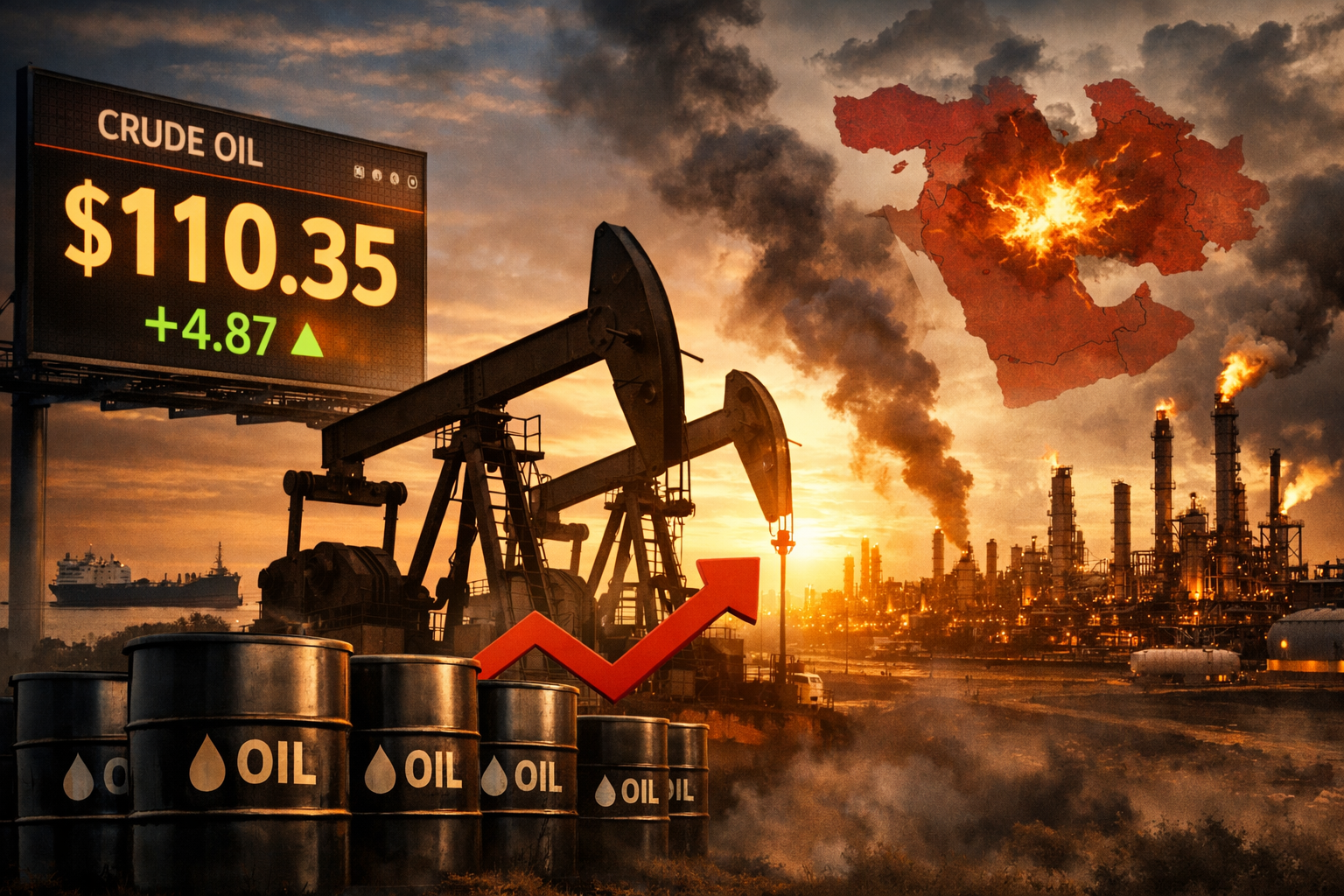
Oil Prices Spike sharply across global markets as escalating conflict in the Middle East fuels fears of major disruptions to energy supplies. The surge in crude prices is already triggering market volatility and raising concerns over higher fuel costs for consumers worldwide.
Middle East Conflict Drives Oil Prices Higher
Oil Prices Spike in global markets as escalating geopolitical tensions in the Middle East raise serious concerns about potential disruptions to energy supplies. Investors and traders are closely watching the situation, fearing that the ongoing conflict could affect oil exports from one of the world’s most critical energy-producing regions.
The sharp rise comes as Oil Prices Spike above the $110-per-barrel level for Brent crude, the international benchmark. This marks the highest level seen since the economic turmoil caused by the COVID-19 pandemic. The surge reflects growing fears that shipping routes, pipelines, or production facilities in the region could become targets if the conflict intensifies.
Market analysts say the situation highlights how quickly Oil Prices Spike when geopolitical uncertainty threatens global energy flows. Oil markets are particularly sensitive to instability in the Middle East, which supplies a large share of the world’s crude exports
According to reporting by Reuters, the sudden rise in prices is a clear signal that global traders expect the conflict to have real consequences for oil supply chains.
Impact on Global Energy Markets
The surge in crude prices has ripple effects far beyond the oil industry. Energy costs influence transportation, manufacturing, food prices, and overall inflation levels worldwide.
Higher crude prices typically translate into increased gasoline and diesel prices, which can directly affect household budgets and economic activity.
Energy economists warn that if the conflict persists, oil markets could remain volatile for months.
Major shipping routes through the Persian Gulf and surrounding regions are critical for transporting global oil supplies. Even the possibility of disruptions to these routes can push prices higher in anticipation of shortages.
The Associated Press reports that traders are closely monitoring the situation, particularly around major oil-producing states that supply Asian and European markets.
Asian Markets React With Sharp Declines
Financial markets in Asia reacted swiftly to the surge in oil prices and the growing geopolitical uncertainty.
Major stock indices across the region recorded steep losses as investors moved away from riskier assets.
South Korea’s benchmark Kospi index plunged nearly six percent, reflecting investor concerns about rising energy costs and their potential impact on industrial output.
Japan’s Nikkei 225 also experienced significant losses, falling more than five percent during trading.
Asian economies are particularly sensitive to oil price fluctuations because many of them rely heavily on imported energy from the Middle East.
Countries such as Japan, South Korea, and India depend on stable energy supply routes to support manufacturing, transportation, and economic growth.
Global Inflation Concerns Return
The sharp rise in oil prices has also reignited concerns about global inflation.
Energy prices play a crucial role in determining the cost of goods and services across the economy. When oil prices climb rapidly, transportation costs increase, which can push up prices for food, consumer products, and industrial materials.
Economists warn that a prolonged period of high oil prices could complicate monetary policy decisions for central banks around the world.
Many countries are still recovering from inflationary pressures that followed the pandemic and global supply chain disruptions.
Higher fuel costs could slow economic growth while simultaneously increasing the cost of living.
Why It Matters
The surge in oil prices has major implications for the global economy. Rising energy costs can drive inflation, increase transportation expenses, and slow economic growth. Governments and financial markets closely monitor oil prices because they often serve as an early indicator of broader economic pressure. The situation also highlights how geopolitical conflicts can rapidly influence global energy security.
What Happens Next
Energy analysts expect oil markets to remain highly volatile as the Middle East conflict continues to unfold. Traders will watch closely for any disruptions to shipping lanes, pipelines, or production facilities.
If tensions escalate further, prices could rise even more sharply. However, strategic oil reserves and increased production from other countries could help stabilize markets if supply disruptions occur.
Financial markets are also likely to remain sensitive to geopolitical developments in the coming weeks.
FAQs
Why did oil prices spike above $110?
Oil prices spiked due to growing fears that the Middle East conflict could disrupt global oil supplies, especially from key exporting countries in the region.
How do rising oil prices affect consumers?
Higher oil prices often lead to increased gasoline and diesel prices, which can raise transportation costs and contribute to inflation.
Why are Asian markets sensitive to oil price changes?
Many Asian economies rely heavily on imported oil from the Middle East, making them particularly vulnerable to supply disruptions and price volatility.
Could oil prices continue rising?
Yes. If geopolitical tensions escalate or energy supply routes are disrupted, oil prices could climb even higher in global markets.
How do oil prices affect the global economy?
Oil prices influence inflation, transportation costs, manufacturing expenses, and overall economic stability worldwide.
- Oil Prices Spike Above $110 Amid Middle East War
- Americans Evacuating Israel Urgent Route Explained by US Ambassador
- APS Attack ATC Acquittal Delivers Crucial Court Verdict
- How Iran Conflict Depleted Stockpiles Impact Strategy
- Alireza Arafi Interim Leadership Council Role Signals Defining Shift
