

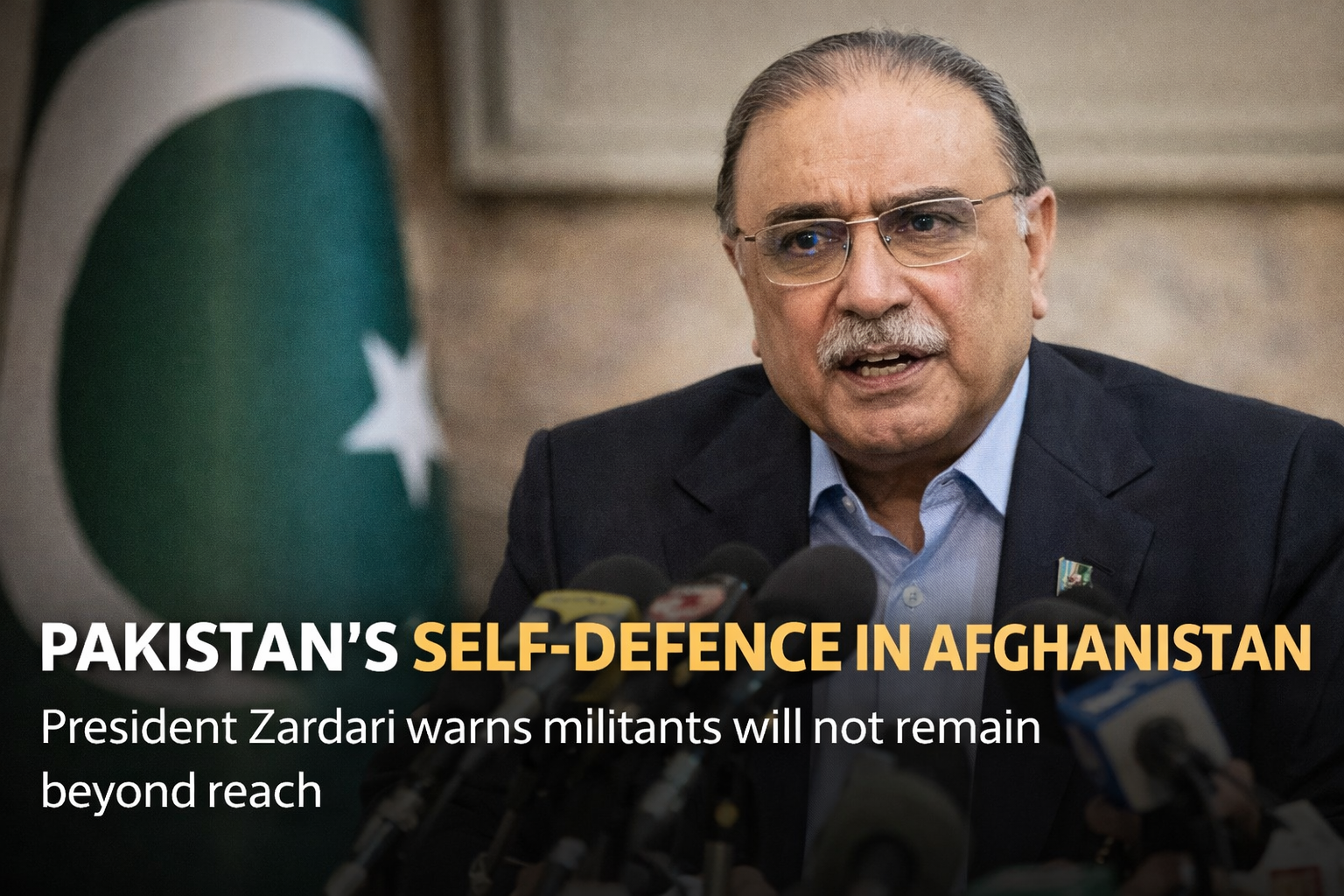
Zardari Afghanistan strikes self-defence statement has escalated regional tensions after President Asif Ali Zardari defended Pakistan’s cross-border action and warned perpetrators of violence that they will not remain beyond reach.
The president said Pakistan’s recent strikes were rooted in its inherent right to protect citizens from terrorism emanating from Afghan soil.
This strong Zardari Afghanistan strikes self-defence position followed intelligence-based operations targeting seven alleged militant camps along the border.
Zardari Afghanistan Strikes Self-Defence Position Backed by UN Report
Explaining the Zardari Afghanistan strikes self-defence stance, the presidency said Pakistan acted after repeated warnings were ignored.
President Zardari referred to findings of the United Nations Security Council Analytical Support and Sanctions Monitoring Team.
The UN report highlighted the presence of:
- Tehreek-e-Taliban Pakistan
- Islamic State Khorasan Province
- Al-Qaeda
- Eastern Turkistan Islamic Movement
The report stated some groups continue to plan attacks from Afghan territory.
Officials said the Zardari Afghanistan strikes self-defence approach aligns with international law principles under the UN Charter.
Warning: Perpetrators Will Not Remain Beyond Reach
Reiterating the Zardari Afghanistan strikes self-defence doctrine, the president warned that if bloodshed continues inside Pakistan, planners and facilitators will not remain beyond reach.
He stressed that Pakistan exercised restraint for a considerable period.
However, he said national security and protection of lives remain non-negotiable.
Rising Border Tensions
Tensions between Islamabad and Kabul have intensified over the past year.
Pakistan accuses militant groups such as the TTP of operating from Afghan soil. Kabul denies providing sanctuary.
Taliban spokesperson Zabihullah Mujahid previously rejected allegations of cross-border facilitation.
Meanwhile, military spokesperson Ahmed Sharif Chaudhry warned that militant safe havens pose a regional threat.
The Zardari Afghanistan strikes self-defence remarks now signal a firmer security posture.
Why This Matters
The Zardari Afghanistan strikes self-defence statement strengthens Pakistan’s diplomatic position by citing UN findings.
It also signals that cross-border terrorism will trigger calibrated responses.
However, it risks further diplomatic strain between the two countries.
What Happens Next
Security analysts expect:
- Increased border monitoring
- Continued diplomatic engagement
- Further intelligence-based operations if attacks persist
Pakistan maintains that its issue is with militant groups, not the Afghan population.
FAQ’s
Why did Pakistan conduct strikes?
Pakistan says it targeted militant camps in self-defence after repeated attacks.
What did President Zardari say?
He warned that perpetrators of violence will not remain beyond reach.
What role does the UN report play?
It cited militant groups operating from Afghanistan, reinforcing Pakistan’s concerns.
Has Afghanistan responded?
Kabul has previously denied allowing militant sanctuaries.
Is this likely to escalate tensions?
It may increase diplomatic strain, but both sides have expressed interest in stability.
